Showing posts with label artfunanimals. Show all posts

Thursday, October 22, 2026


Trouble viewing this e-mail? Try our web version.

Audubon Alaska


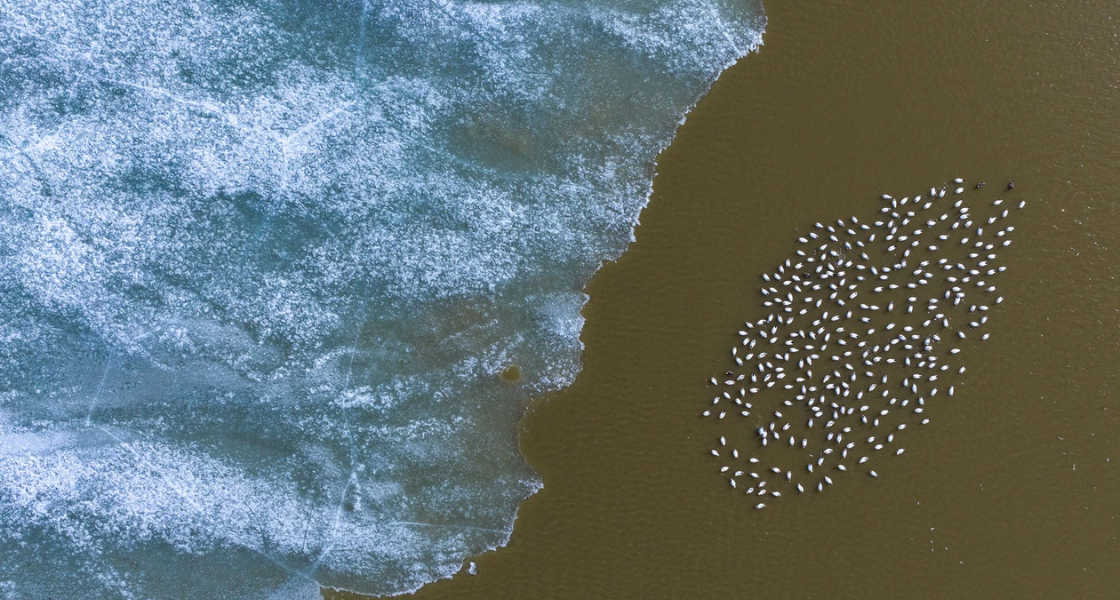
Snow Geese on frozen landscape

Snow Geese use Teshekpuk and nearby lakes to molt after breeding. Photo: Gerrit Vyn

Alaska’s Arctic is a place of extraordinary wildlife, vital habitats, and deep cultural connections—but it’s facing growing pressures from oil and gas development and a warming climate. This month, we’re exploring what’s at stake in the Western Arctic, from the importance of protecting Teshekpuk Lake to the changing challenges facing polar bears and seabirds. Read on to discover why this remarkable landscape matters and how you can help protect its future.
 

Protecting the Future of Alaska’s Western Arctic

Alaska’s Western Arctic is a vital habitat for millions of migratory birds, caribou, polar bears, and other wildlife—and home to Iñupiaq communities whose cultures and subsistence traditions are deeply connected to the land. But proposed changes to federal regulations threaten protections for this ecologically and culturally irreplaceable landscape. This piece breaks down what’s at stake in the 23-million-acre National Petroleum Reserve–Alaska and why its Special Areas, including Teshekpuk Lake, matter.

You can also take action now! Encourage the Bureau of Land Management to protect the Western Arctic’s wildlife, habitats, and communities by submitting a public comment today. Read more here!
 
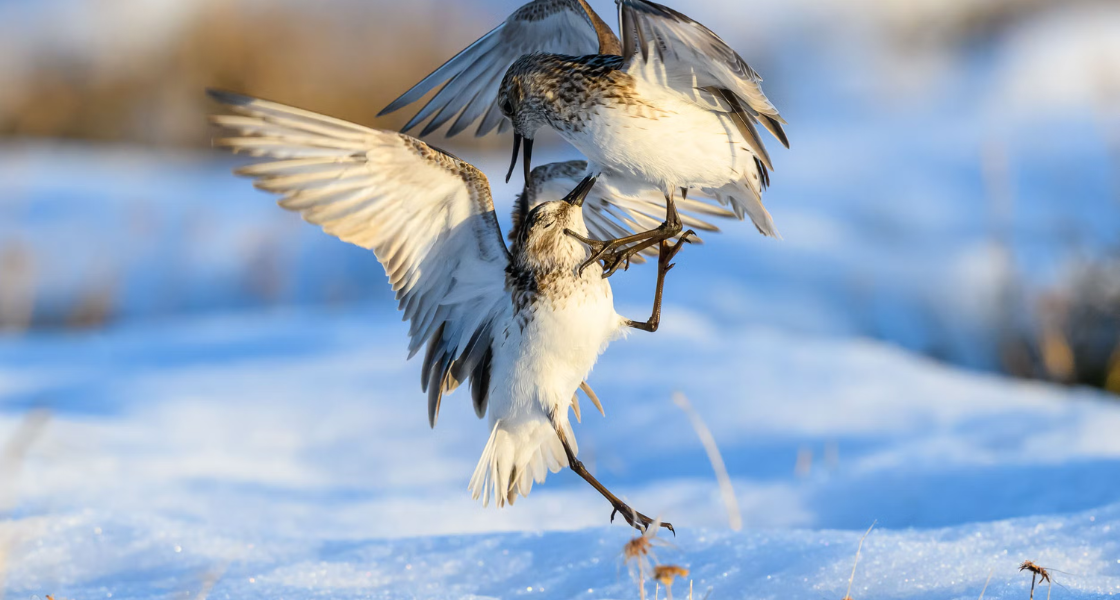
Two shorebirds on snow

Semipalmated Sandpipers spar for nesting grounds after migrating from South America.Photo: Gerrit Vyn

Teshekpuk Lake: A Vital Arctic Haven

What makes Alaska’s Western Arctic worth protecting? This powerful photo essay (featuring imagery from conservation photographer Gerrit Vyn) brings readers to Teshekpuk Lake, one of the world’s most important bird-breeding grounds. Each spring, some 600,000 shorebirds return to its wetlands, which also sustain geese, caribou, polar bears, and Iñupiaq communities.

As oil and gas development threatens this irreplaceable landscape, Audubon CEO Elizabeth Gray reflects on her own journey to Teshekpuk Lake and the connections birds forge across the hemisphere. Together, these stories remind us why protecting Arctic habitat matters far beyond Alaska—and why we must act now. Read more here!
 
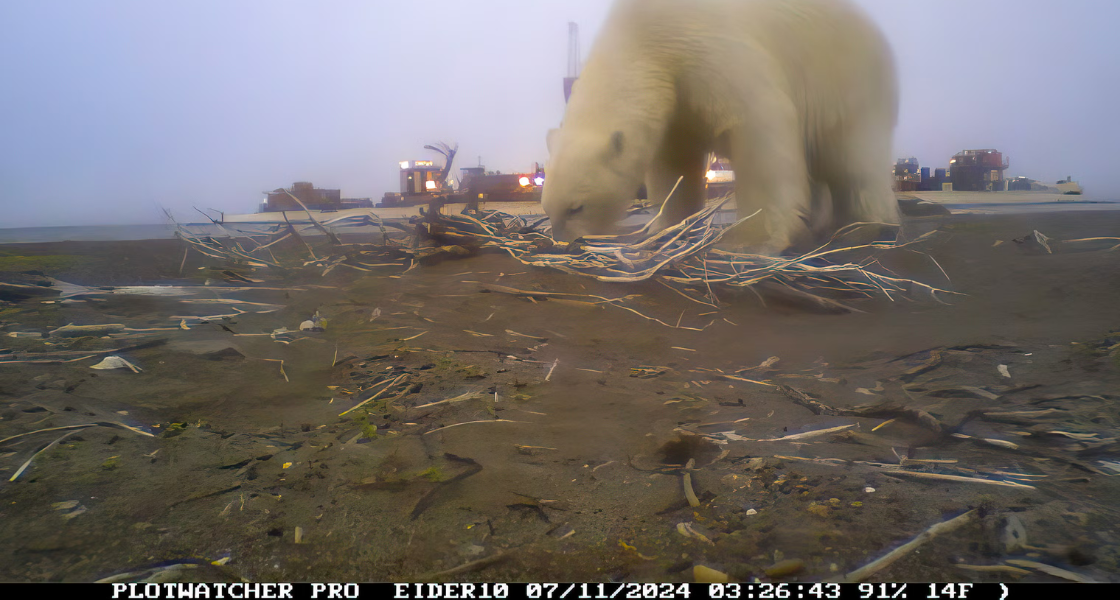
Polar bear with nest on wildlife cam

Remote camera timelapse image documenting a polar bear consuming Pacific Common Eider eggs at a nesting colony on Spy Island, Alaska. Photo: Courtesy of WCS

P.S. A Changing Arctic Food Web

More Arctic content? You got it. As Arctic sea ice disappears, hungry polar bears are increasingly turning to seabird eggs and chicks for food, sometimes wiping out entire nesting colonies. Learn how climate change is reshaping predator-prey dynamics in Alaska’s Arctic. Read here!
 

 Take action today by submitting a comment in support of protecting the Western Arctic's Special Areas, including Teshekpuk Lake. The deadline to comment is November 9.

Take action!

Audubon Alaska
750 West Second Ave., Suite 100
Anchorage, AK 99501 USA
(907) 276-7034 | www.audubon.org/alaska

© 2026 Audubon Alaska

#audubonalaska,#ineartmagazineblog.blogspot.com #sunstormfineartmagazine.com#artfunenviornmenal#artfunalaska#artfunnow#artfunlandscapes#artfunanimals

Monday, October 12, 2026

Hi THis is not an Early Trick or treat image! IT's a notice that biodiversity os falling as species are closer to extinction.

As a Eco Ar- Awareness communicator. The public is necessary to keep the balance between species extinction and human encroachment on wild habitat within  balance.  Jamie Forbes, Publisher: Fineartmagazineblog.blogspot.com, Sunstormfineartmagazine.com, and the Backyardenviornmentalists.com  

 SunStormFineartmagazine.com , https://sites.google.com/view/eco-advocacy/home

https://sites.google.com/backyardenvironmentalist.com/backyardenvironmentalist/home


 https://www.wtvr.com/science-and-tech/


One worthwhile group : 

Center for    Biological    Diversity   
 
Give Now »

Desert tortoise

Hi JAMIE,

The Trump administration has ratcheted up its attack on public lands.

It just approved a massive data center on public land in southern Nevada without letting the public know or participate — and without any environmental review.

The theft of public land to benefit tech oligarchs must be stopped, and the Center for Biological Diversity appealed this approval yesterday morning.

Please make an urgent gift to the Future for the Wild Fund to help continue this fight. We can’t let America's treasured public lands become Big Tech’s sacrifice zone.

The proposed data center would consume 167 megawatts of electricity, destroy dozens of acres of endangered species habitat, siphon water from the drought-stricken Colorado River Basin, and degrade air quality near Boulder City.

Public lands are not vacant lots for corporations to claim. They’re crucial refuges for imperiled wildlife, including southern Nevada's desert tortoises and southwestern willow flycatchers.

Our shared lands are meant for biodiversity and restoration, recreation, and spiritual renewal — treasures that belong to us and to future generations.

They shouldn’t be handed over to tech companies so that billionaires get cheap access to valuable land and water, increase their profits, and leave the people to pay the environmental toll.

This administration continues to treat public lands as a freebie for private industry, and we won’t let them set that dangerous precedent. The Center's appeal is the first step in stopping this reckless development in its tracks. 

The stakes go far beyond one data center. Allowing these projects on public lands will put even more pressure on already fragile ecosystems and rare and vanishing wildlife. 

We’re prepared to use every legal tool available to push back against this growing threat. 

Because threats to wildlife and public lands are ongoing, we need you for the long haul. Please start a monthly donation to sustain our defense.

For the wild,

Kierán Suckling

Kierán Suckling
Executive Director
Center for Biological Diversity

P.S. Monthly supporters who give steady gifts of $10 or $20 sustain our work for wildlife and wild places. Do your part by starting a monthly donation.

#centerbiologicaldiversity#fineartmagazineblog.blogspot.com #sunstormfineartmagazine.com#artfunenviornmenal#artfunanimals

Tuesday, September 15, 2026

Fine Art Magazine Editions presents, Jamie Forbes ~The Galactic Dust SunSet Series & Animals

We are proud to announce our latest Fine Art Magazine Editions;  

Fine Art Magazine Editions 

Jamie Forbes Photographs: The Galactic Dust SunSets Series & Animals 

“The atoms of our bodies are traceable to stars that manufactured them in their cores and exploded these enriched ingredients across  our galaxy, billions of years ago. For this reason, we are biologically connected to every other living thing in the world. We are  chemically connected to all molecules on Earth. And we are atomically connected to all atoms in the universe. We are not figuratively,  but literally stardust.” ― Neil deGrasse Tyson 

I captured the intrinsic energies in each landscape or animal pictured seeking to initiate a dialogue between the  viewer about beauty in the environment and stewardship: “we live with others” all are participants in sharing  and shaping our environment. ©all rights reserved ~Galactic Dust Sunset/Animals/Jamie Forbes/SunStorm Art Pub. Co Inc. 2026 

Available through SunStorm Fine Art: edition size 15/ 2AP/ 2HC 

$600 Image size 13”x19” 

$300image size 8.5x 11”  

Printed with archival ink on 300-320-gram paper fine art papers. 

https://sunstormfineartmagazine.com/jamie-forbes-photography/



Tuesday, September 8, 2026

Tom Palmore's images of ~Animals of Distinction~ exhibits at Lew Allen Galleries September 11-October, 2026

I

I always love animal portraits! Mine , Joel Sartore, and now Tom Palmore~~~ 

Tom Palmore: Animals of Distinction

Opening Friday, September 11, 2026

 
Tom Palmore Exhibtion Page
Navajo Bunny, 2026, oil & acrylic on panel, 18 x 24 in​
 

On View: September 11 – October 10, 2026

Last Friday Railyard Art Walk Reception: Friday, September 25, 2026, from 5:00–7:00 PM

LewAllen Galleries is pleased to present an exhibition of paintings by Tom Palmore, whose distinct portraiture famously elevates his animal subjects with formal gravity, dignity, and quiet majesty more commonly reserved for humans of social and political distinction.
​
Working meticulously in oil and acrylic with the precision of classical natural history illustration, Palmore renders every whisker, downy feather, and iridescent scale with extraordinary tactile clarity. By placing these hyper-detailed animal sitters against stylized, culturally loaded stage sets—such as manicured topiary gardens, Southwestern textiles, and pre-Columbian reliefs—he creates a delightfully incongruous tension between human artifice and the natural world. Bathed in dimensional studio light, Palmore’s sitters engage the viewer directly at eye level with stoic composure and intelligence, subverting traditional realism to celebrate individual personality and presence.
​
Preview Exhibition Page
Red Fox in A Topiary Garden, 2026, oil & acrylic on canvas, 24 x 30 in
White Falcon, 2026, oil & acrylic on canvas, 22 x 28 in
Black Panther, 2026, oil & acrylic on panel, 18 x 24 in
Educated at the Pennsylvania Academy of the Fine Arts, Palmore has spent over five decades questioning the conventions of portraiture. His work is featured in major permanent collections nationwide, including the Smithsonian Institution, the Whitney Museum of American Art, the Brooklyn Museum, and the Philadelphia Museum of Art.

​©2026 LewAllen Galleries | Artwork ©Tom Palmore

 
LewAllen Galleries
1613 Paseo de Peralta Santa Fe, NM 87501
Mon - Fri  10 - 6 / Sat 10 - 5
Facebook
 
Instagram
#lewallengalleries#fineartmagazineblog.blogspot.com#sunstormfineartmagazine.com#tompalmoreanimalpics #artfunanimals#artfunsantafe#artfunnow