Showing posts with label issuu.com/fineartmagazine. Show all posts

Wednesday, April 29, 2026

Hi All, Catch the Sag Harbor Whaling & HIstorical Museum, see what took place 100 years ago today.!!!Sag Harbor is very pretty this time of year so stop by if you have the chance while visiting long Island > Catch the


Sag Harbor is very pretty this time of year so stop by if you have the chance while visiting long Island to visit the Museum!!!!


Upper Main Street in Sag Harbor, undatedImage Courtesy of the Sag Harbor Community Archive, John Jermain Memorial Library.

SAG HARBOR

100 YEARS AGO THIS WEEK

April 26 – May 2, 1926

About 40 merchants and businessmen of the village, invited to discuss the nuisance caused by littering on Main Street with papers and debris of various kinds, attended the regular meeting of the village trustees in the Municipal building. Village President Kiernan declared that at the present time, when thousands of dollars were being spent to advertise Long Island to the world, it was necessary that the village present its best appearance to the myriad of tourists who would visit Long Island. First appearances go far, he said.


An occasion of more than ordinary interest was scheduled to take place at Pierson auditorium. Part one of the entertainment presented by the primary classes would comprise of songs by grades one, two, and three under the direction of the teachers. Part two would consist of selections by the High School Girls’ Glee Club. Part three would be a playlet by pupils in grades four, five, six, seven, and eight entitled “Emily’s Dream.”


A delightful card party was held at the home of Mrs. J. D. Kelly for the benefit of the degree of Pocahontas. There were fifty-seven present. Miss Mary Battle made high score in pinochle, Mrs. George McFarland second, Mrs. J. D. Kelly third, and Mrs. George Cary fourth.

Facebook  Instagram

Sag Harbor Whaling and Historical Museum | info@sagharborwhalingmuseum.org | 631-725-0770

Sag Harbor Whaling and Historical Museum | 200 Main Street | Sag Harbor, NY 11963 US

#sag harbor whaling museum# issuu.com/fineartmagazine#sunstormfineartmagazine.com.#fineartmagazineblogblogspot.com#artfunforever#happyartspring#beinspiredcreate,

Tuesday, February 24, 2026

33Rd Annual St. Louis Art Fair September 18-20, 2026, Application Deadline 3/18/2026

33rd Annual Saint Louis Art Fair

September 18-20, 2026

Application Deadline 3/10/26 ($45)

Final Deadline 3/18/26 ($55)

APPLY HERE

WHAT: 33rd Annual Saint Louis Art Fair presented by Emerson

WHERE: Downtown Clayton, Missouri (Suburb of Saint Louis)

WHEN: September 18-20, 2026

TIMES: Friday 5pm - 10pm | Saturday 10am - 9pm | Sunday 11am - 5pm

2025 Festival Highlights Video - Click Here

NOTEWORTHY:

  • Consistently Ranked Among Top National Art Festivals
  • Limited to 153 Artists plus returning Award Winners
  • Estimated Attendance - 130,000
  • 2025 Net Average Sales $14,379 (Festival Survey)
  • Up to $15,000 Cash Awards
  • Free Electricity (up to 500 Watts)
  • 24-Hour Security
  • Free/Reserved Artist Parking
  • Jury Fees: $45 Jan. 1- Mar. 10 | $55 Mar. 11-18
  • Booth Fee: $685 (10'x10' with 2' buffer) | Double Booth: $1,450

NOW ACCEPTING APPLICATIONS on ZAPP

Application Deadline: March 18, 2026

Jury Preview (open to the public): April 9, 2026

Artist Notifications Emailed: May 2, 2026

Booth Fee Due: May 31, 2026


Visit our websiteSaintLouisArtFair.com

Email inquiries: Info@SaintLouisArtFair.com

Contact: Sarah Umlauf, Executive Director at (314) 863-0278

Celebrating its 33rd year in 2026, the Saint Louis Art Fair presented by Emerson is regularly ranked among the top festivals in the nation, among both artists and show visitors. A multi-faceted cultural event, the Fair offers live performing arts ensembles, educational art projects for children and food offerings from St. Louis's most respected restaurants. The Fair is held in Clayton, MO, one of the nation's most affluent business and residential communities.


Very high attendance, excellent sales, and top-quality artists from across the United States make exhibiting at the Saint Louis Art Fair presented by Emerson among the most sought-after venues. Jurying is by art industry professionals and prior-year award winning artists are jury-exempt. Repeat attendance by the public ensures potential multi-year sales. Artist amenities and staff/volunteer attention to detail and artists' needs are considered among the best in the nation


In addition to the amazing visual art exhibition, the festival will feature live performing arts ensembles across three stages, live art demonstrations in the MakerSpace, 10 of St. Louis’ most delectable restaurants, food trucks, and the Creative Castle, an area featuring educational art projects for children.


Visit our Website for more information

#st.louisartfair#fineartmagazineblog.blogspot#sunetormfoneartmagazine

Friday, August 5, 2022

CORSCADEN BARN GALLERY SUMMER 2022

CORSCADEN BARN GALLERY SUMMER 2022


Hours: FRI. SAT. SUN. MON.  
12:00 to 5:00 p.m.


RAKING SHADOWS BY MICHAEL GAUDREAU PSA
17.5”X19.5” pastel recently exhibited at the National Pastel Society of America Exhibit

Martha Corscaden
Cell: 518-576-9850

58 Beers Bridge Way


Keene Valley, NY 12943
#corsacdenbarn#fineartmagazine#summerartfun

Tuesday, July 26, 2022

Lowell Ryan Projects presents Allison Lu Wang splash, drip, drip, woo, splash July 23 - July 31, 2022

Allison Lu Wang
splash, drip, drip, woo, splash
July 23 - July 31, 2022

Wednesday-Sunday 12-6pm

***Silver Lake: 
3118 Sunset Blvd.
Los Angeles, CA 90026

Allison Lu Wang
nightcall , 2022
Archival ink on linen
48h x 36w in / 121.92h x 91.44w cm
AW-006

“Well dreams, they feel real while we're in them, right? 
It's only when we wake up that we realize how things are actually strange. 
Let me ask you a question, you never really remember the beginning of a dream do you?” 
- the character of Cobb in Christopher Nolan’s Inception


Lowell Ryan Projects is pleased to present a solo exhibition by Los Angeles-based artist Allison Lu Wang (b. 1994, Los Angeles, CA) titled splash, drip, drip, woo, splash. Composed of nine paintings, 48h by 36w inches in scale, all archival ink on linen, this will be Wang’s first exhibition with the gallery. In these recent works, Allison Lu Wang depicts various landscapes that are a reflection of the world she lives in both literally and figuratively. Her cinematic use of color and manipulation of imagery create works that take the viewer on a journey through time and place within the blink of an eye.

Wang’s process of landscape painting—or one might call landscape building—pulls from disparate sources in her life, imagination, experiences and fascinations. Her process begins in an analog format sourcing various printed images cut from magazines, books, etc., as well as directly painted elements, such as an orchid in her studio rendered in oil paint. Entering the digital realm, photographs of these collages and painted images are further expanded upon and manipulated on the computer. There is always a sense of place, whether a more direct image from a street in her native Los Angeles or a scene from a favorite movie or video game. Pictorially no subject matter is treated with more or less importance, however direct cinematic and pop-cultural references can take on greater significance conceptually to the artist. Anakin Skywalker’s transformation into Darth Vader—consumed by paranoia, power and greed, and Cobb’s team in Inception standing on a street awaiting an unknown force take on both emotional and contextual significance to the artist—references to real life emotions played out in a fantastical realm.
 
In a world increasingly separating itself from a grounding force, the emotional ramifications of one’s psychological existence are explored through both formal process and subject matter. While not immediately evident at first glance, the artist has placed an image of herself in each work. An obvious signifier of the personal nature of the work, but also a nod to the human experience and our emotional capacity to understand the shift from the Information Age into the Age of Imagination.

VIEW MORE
Allison Lu Wang
nightcall (detail), 2022
AW-006
 
Allison Lu Wang
why’d you only call me when you’re high, 2022
Archival ink on linen
48h x 36w in / 121.92h x 91.44w cm
AW-004
Allison Lu Wang
why’d you only call me when you’re high, (detail) 2022
AW-004
 
Allison Lu Wang
ocean drive, 2022
Archival ink on linen
48h x 36w in / 121.92h x 91.44w cm
AW-008
Allison Lu Wang
ocean drive (detail), 2022
AW-008
 
Allison Lu Wang
slippery [’scuse me], 2022
Archival ink on linen
48h x 36w in / 121.92h x 91.44w cm
AW-010
Allison Lu Wang
slippery [’scuse me] (detail), 2022
AW-010
 
For more information contact: info@lowellryanprojects.com
 
Email
Website
Instagram
Facebook
Tumblr
Pinterest
#lowellryanprojects#fineartmagazine#artsummerfun

Saturday, May 21, 2022

The United Nations Supports World Bee Day 20 May

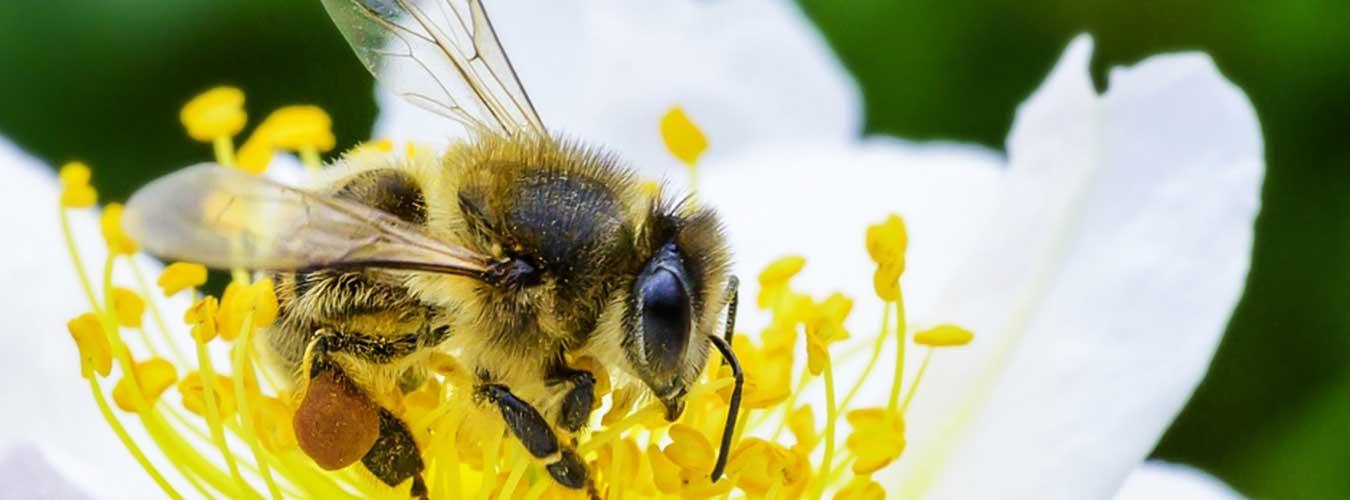
A bee drinks nectar of a flower
Three out of four crops across the globe producing fruits, or seeds for use as human food depend, at least in part, on bees and other pollinators.
PHOTO:Photo FAO/Greg Beals

We all depend on the survival of bees

Bees and other pollinators, such as butterflies, bats and hummingbirds, are increasingly under threat from human activities.

Pollination is, however, a fundamental process for the survival of our ecosystems. Nearly 90% of the world’s wild flowering plant species depend, entirely, or at least in part, on animal pollination, along with more than 75% of the world’s food crops and 35% of global agricultural land. Not only do pollinators contribute directly to food security, but they are key to conserving biodiversity.

To raise awareness of the importance of pollinators, the threats they face and their contribution to sustainable development, the UN designated 20 May as World Bee Day.

The goal is to strengthen measures aimed at protecting bees and other pollinators, which would significantly contribute to solving problems related to the global food supply and eliminate hunger in developing countries.

We all depend on pollinators and it is, therefore, crucial to monitor their decline and halt the loss of biodiversity.

Bee engaged: Celebrating the diversity of bees and beekeeping  systems
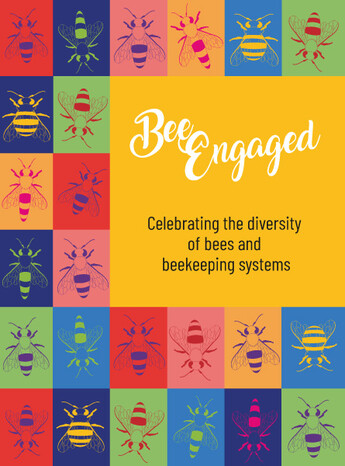
World Bee Day 2022 poster20 May 2022, 13:00–14:45 CEST
Agenda Register | Webcast

Beekeeping is a widespread and global activity, with millions of beekeepers depending on bees for their livelihoods and well-being. Together with wild pollinators, bees play a major role in maintaining biodiversity, ensuring the survival and reproduction of many plants, supporting forest regeneration, promoting sustainability and adaptation to climate change, improving the quantity and quality of agricultural productions.

This year FAO will celebrate World Bee Day through a virtual event, under the theme ‘Bee Engaged: Celebrating the diversity of bees and beekeeping systems’

The event featuring bee and pollinator experts and practitioners from across the world will open with a video message by FAO Director-General QU Dongyu. The event will raise awareness on the importance of the wide variety of bees and sustainable beekeeping systems, the threats and challenges they face and their contribution to livelihoods and food systems.

The event will be available in English, French, Spanish, Arabic, Chinese and Russian languages.


Do you know all the different pollinators?
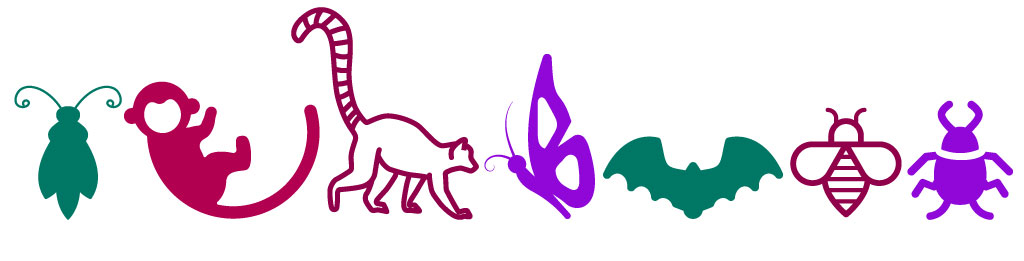
infograph of different pollinators

We need to act now

Bees are under threat. Present species extinction rates are 100 to 1,000 times higher than normal due to human impacts. Close to 35 percent of invertebrate pollinators, particularly bees and butterflies, and about 17 percent of vertebrate pollinators, such as bats, face extinction globally.

If this trend continues, nutritious crops, such as fruits, nuts and many vegetable crops will be substituted increasingly by staple crops like rice, corn and potatoes, eventually resulting in an imbalanced diet.

Intensive farming practices, land-use change, mono-cropping, pesticides and higher temperatures associated with climate change all pose problems for bee populations and, by extension, the quality of food we grow.

Recognizing the dimensions of the pollination crisis and its links to biodiversity and human livelihoods, the Convention on Biological Diversity has made the conservation and sustainable use of pollinators a priority. In 2000, the International Pollinator Initiative (IPI) was established (COP decision V/5, section II) at the Fifth Conference of Parties (COP V) as a cross-cutting initiative to promote the sustainable use of pollinators in agriculture and related ecosystems. Its main goals are monitoring pollinators decline, addressing the lack of taxonomic information on pollinators, assessing the economic value of pollination and the economic impact of the decline of pollination services and protect pollinator diversity.

Along with coordinating the International Pollinator Initiative (IPI), the FAO also provides technical assistance to countries on issues ranging from queen breeding to artificial insemination to sustainable solutions for honey production and export marketing.

Discover other initiatives, national and international, dedicated to the protection of pollinators.

>> Facilitated by FAO

How can we do more?

Individually by: 

  • planting a diverse set of native plants, which flower at different times of the year;
  • buying raw honey from local farmers;
  • buying products from sustainable agricultural practices;
  • avoiding pesticides, fungicides or herbicides in our gardens;
  • protecting wild bee colonies when possible;
  • sponsoring a hive;
  • making a bee water fountain by leaving a water bowl outside;
  • helping sustaining forest ecosystems;
  • raising awareness around us by sharing this information within our communities and networks; The decline of bees affects us all!

As beekeepers, or farmers by:

  • reducing, or changing the usage of pesticides;
  • diversifying crops as much as possible, and/or planting attractive crops around the field;
  • creating hedgerows.

As governments and decision-makers by:

  • strengthening the participation of local communities in decision-making, in particular that of indigenous people, who know and respect ecosystems and biodiversity;
  • enforcing strategic measures, including monetary incentives to help change;
  • increasing collaboration between national and international organizations, organizations and academic and research networks to monitor and evaluate pollination services.

More tips on how to help bees and other pollinators

#unworldbeeday#fineartmagazinebeefun#savethepolinators