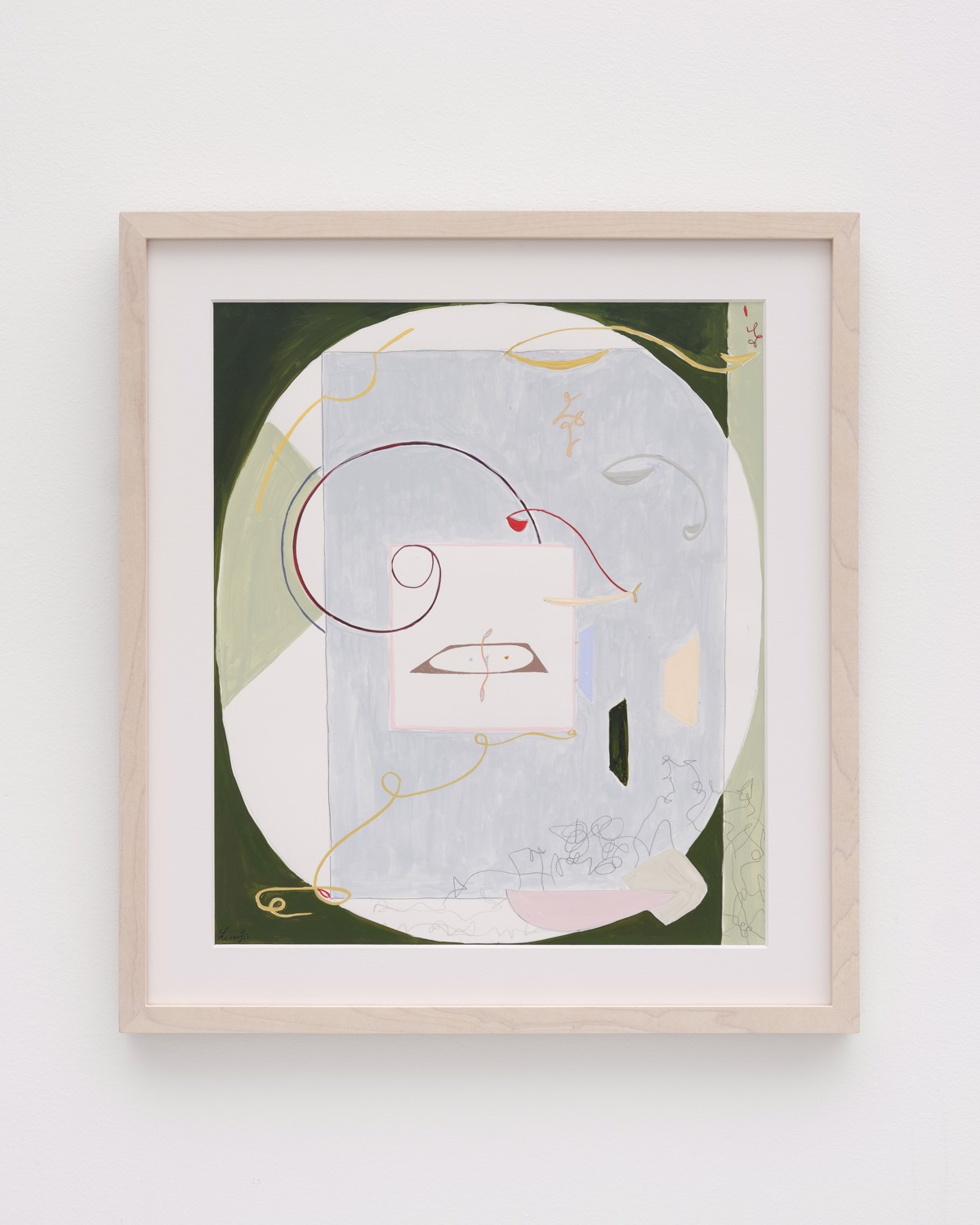
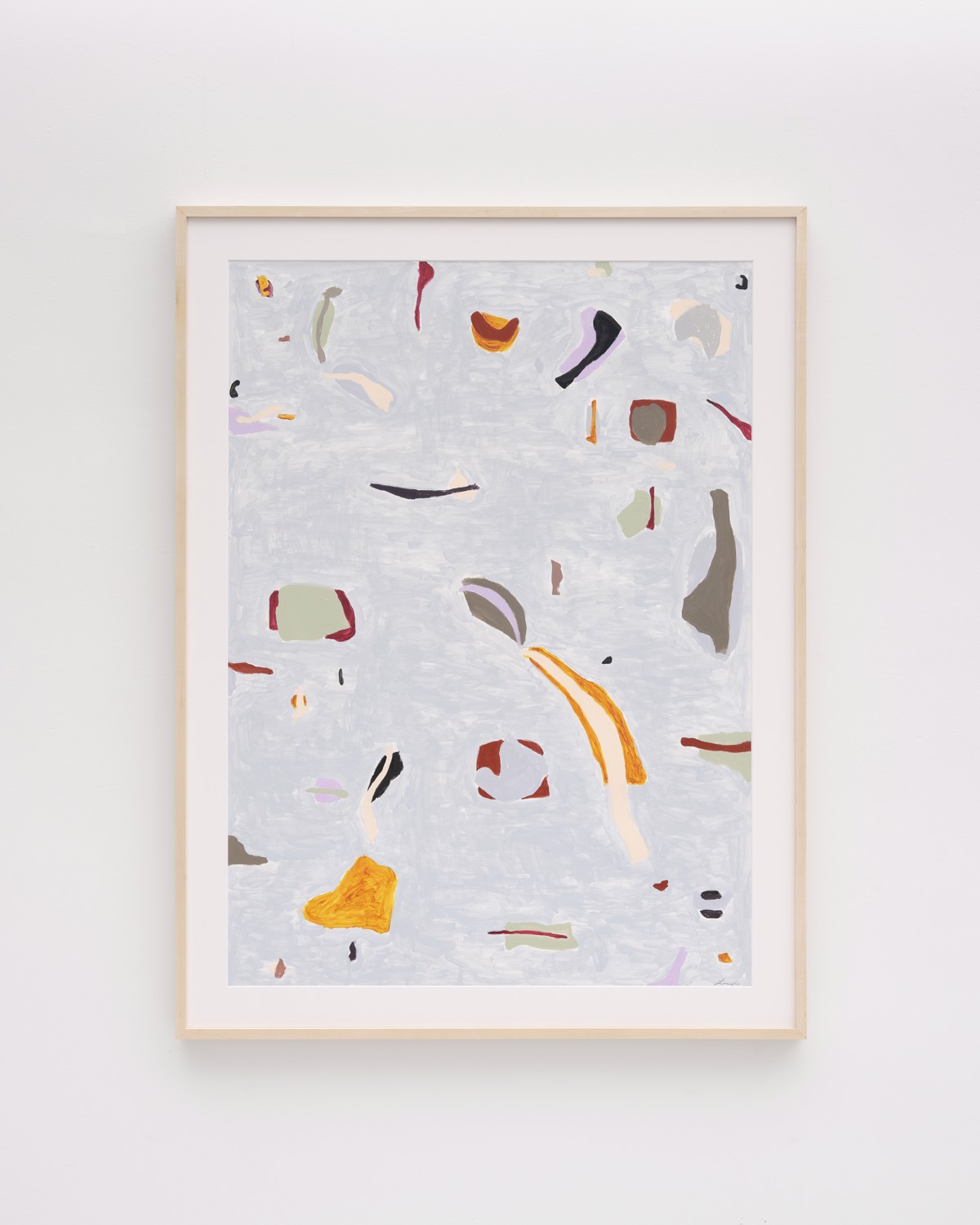
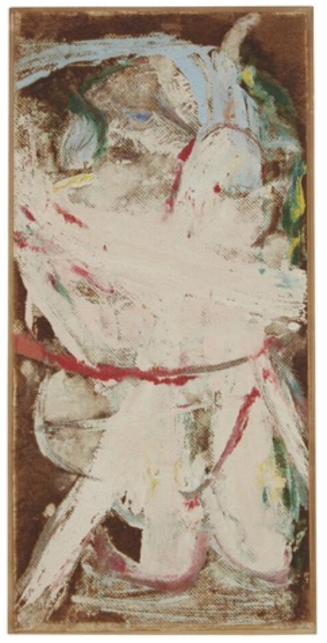
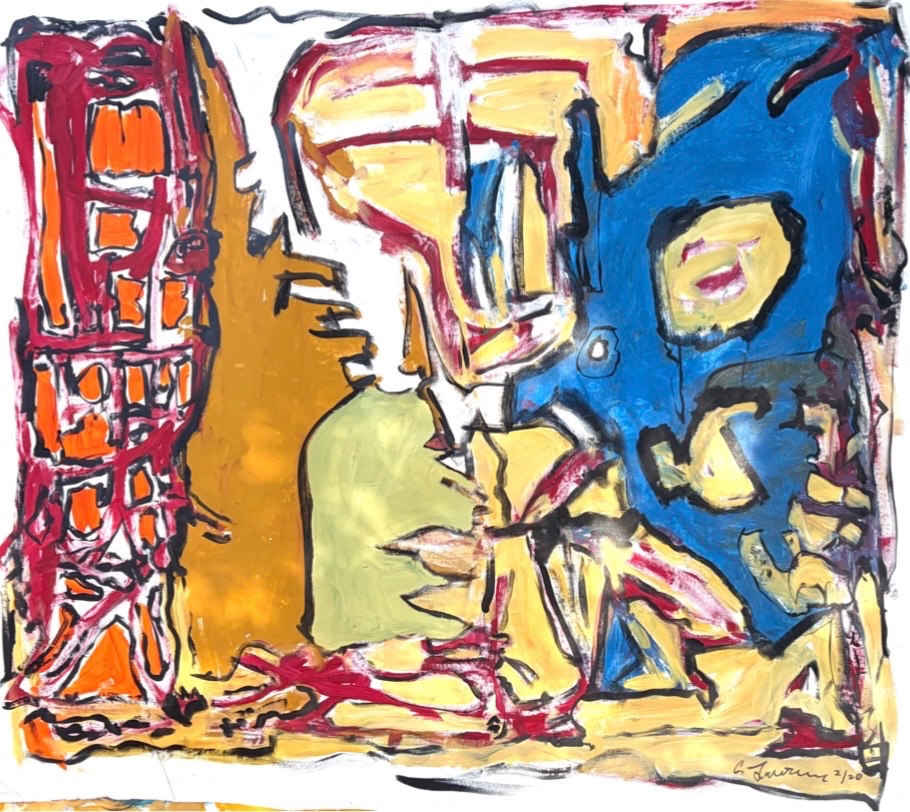
Claude Lawrence paints like a jazz musician plays. His canvases don’t arrive fully composed. They start with a motif - a quick charcoal stroke, a patch of raw umber, a cadence of blue - and then he responds to it. He works in layers the way a quartet works in choruses. He states a theme, then breaks it, then finds it again an octave higher. The surface becomes a record of listening. You can see him pause, erase, re-hit the same note. That’s the jazz in him: timing over planning, call-and-response over blueprint. Lawrence often cites improvisation as his method. He keeps music in the studio - Coltrane, Monk, Miles - not as background, but as structure. A 12-bar blues teaches you how much freedom you can take before the form collapses. Lawrence treats the edges of his paintings the same way. He’ll push a shape to the verge of chaos, then resolve it with a single, decisive line. The paintings breathe. They have rests and syncopation. Negative space functions like a drummer dropping out for a bar: it makes what comes next hit harder. The de Kooning Influence Willem de Kooning is the other voice in the room. Lawrence absorbed de Kooning’s lesson that a line can be both brutal and tender in the same gesture. Look at the way Lawrence loads his brush: thick paint applied, then scraped back with the butt end of the handle. That’s de Kooning’s Woman I energy - aggression used to find form, not destroy it. But Lawrence doesn’t imitate the Abstract Expressionist scrum. Where de Kooning wrestled the figure into abstraction through force, Lawrence lets the figure emerge from rhythm. De Kooning gave him permission to make the brushstroke itself carry meaning. Lawrence took that permission and ran it through a jazz filter. The stroke becomes a phrase. A slashed black line isn’t just paint, it’s a cymbal crash. A softened edge isn’t hesitation, it’s a note bending. Where They Meet The convergence happens in “time.” Both artists understood that a painting records duration. De Kooning’s surfaces show months of attack and retreat. Lawrence’s surfaces show the arc of a solo. He’ll work on a canvas while a record loops, letting the repetition teach him when to stop. The result is work that feels played, not made. Lawence’s best paintings don’t illustrate jazz. They behave like it. And the de Kooning influence isn’t stylistic borrowing. It’s lineage: learning that the hand can think faster than the mind, and trusting the gesture to carry the truth. -Lucas F. Natali |