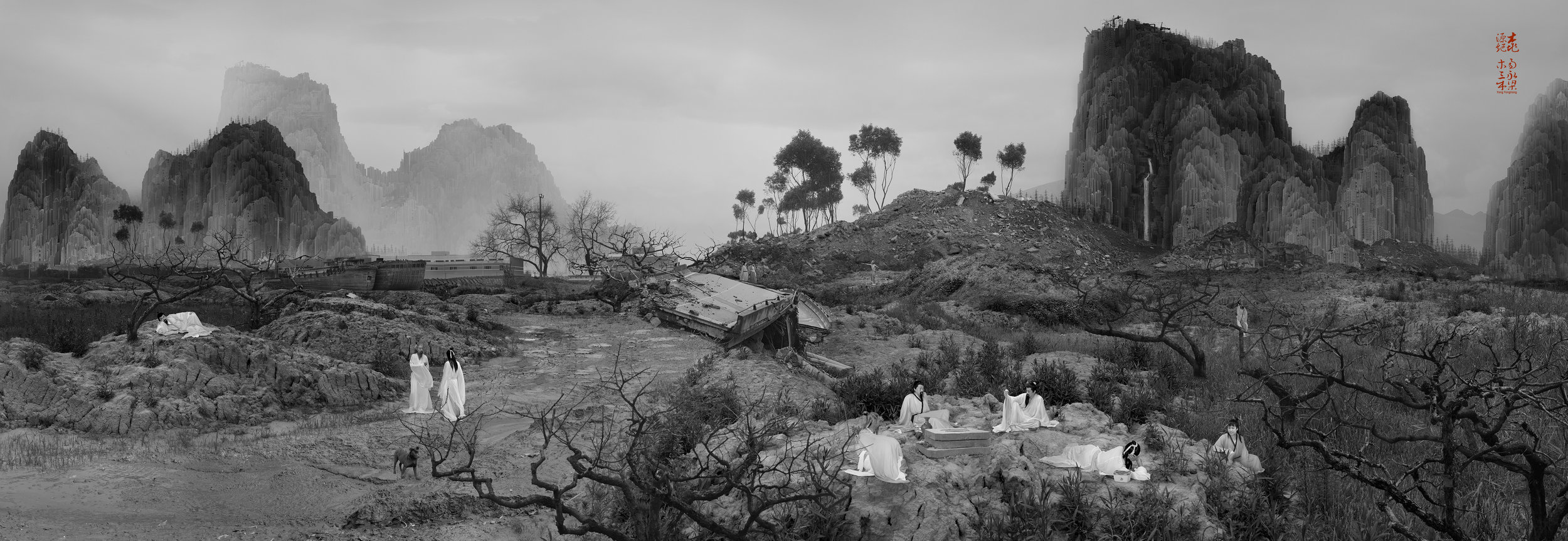
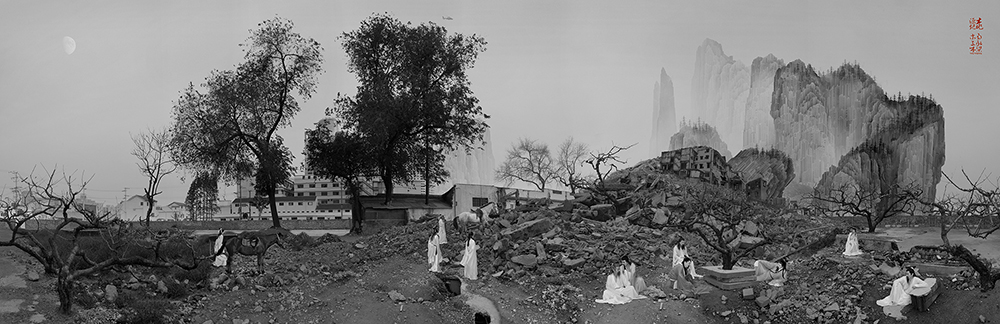
| Ode to the Goddess of Luo River, 2011, ed. 3, 95 x 350 cm, stampa Epson Ultra Giclée su carta Epson Hot Press Natural Ode to the Goddess of Luo River, 2011, ed. 3, 95 x 350 cm, Epson Ultra Giclee Print on Epson Hot Press Natural |
Il Mito di "Peach Blossom Colony": Il Paradiso Perduto
The Myth of "Peach Blossom Colony": The Paradise Lost
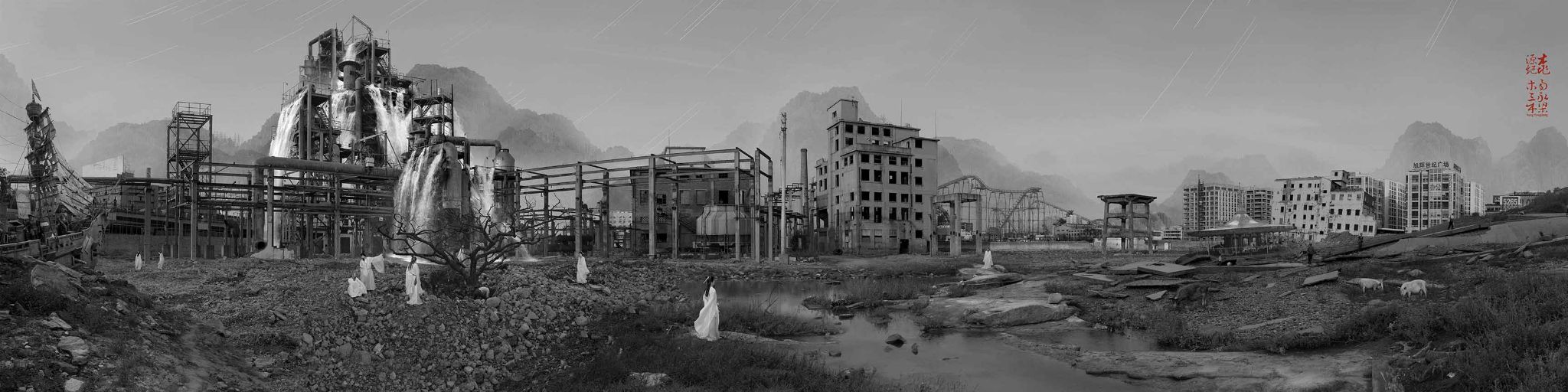
Il celebre progetto Peach Blossom Colony, realizzato nel 2011, affonda le sue radici concettuali in un caposaldo della letteratura classica cinese, The Peach Blossom Spring, scritto nel 421 d.C. dal poeta Tao Yuanming. Quel testo antico narrava la storia senza tempo di un pescatore che, camminando lungo un sentiero costeggiato da alberi di pesco in fiore, scopriva per caso l'ingresso di una grotta nascosta. Al di l' di quell'antro si apriva un’utopia geografica e sociale: un villaggio rurale protetto dove gli abitanti vivevano in totale armonia con i cicli della natura, del tutto ignari delle guerre, dei sanguinosi cambi di dinastie e dei tumulti del mondo esterno. Una vera e propria via di fuga dorata dalla pesantezza della realtà storica. Yang Yongliang riprende questo mito fondativo e lo traspone nell'era dell'Antropocene, ponendo allo spettatore una domanda tanto poetica quanto spietata: cosa è rimasto di quell'utopia letteraria oggi? Dove può rifugiarsi lo spirito dell'uomo contemporaneo quando persino la natura più remota e sacra è stata colonizzata dal cemento, dalla speculazione e dal profitto industriale? La colonia di cui parla l'artista non è più un rifugio di pace, ma un territorio occupato e stravolto dalle logiche della produzione di massa. The celebrated project Peach Blossom Colony, created in 2011, sinks its conceptual roots into a cornerstone of classical Chinese literature, The Peach Blossom Spring, written in 421 AD by the poet Tao Yuanming. That ancient text told the timeless story of a fisherman who, walking along a path lined with blossoming peach trees, accidentally discovered the entrance to a hidden cave. Beyond that cavern opened a geographical and social utopia: a protected rural village where the inhabitants lived in total harmony with the cycles of nature, entirely unaware of wars, bloody changes of dynasties, and the turmoils of the outside world. A true golden escape from the weight of historical reality. Yang Yongliang takes up this foundational myth and transposes it into the era of the Anthropocene, asking the viewer a question as poetic as it is ruthless: what is left of that literary utopia today? Where can the spirit of contemporary man find refuge when even the most remote and sacred nature has been colonized by concrete, speculation, and industrial profit? The colony the artist speaks of is no longer a haven of peace, but a territory occupied and overturned by the logic of mass production.
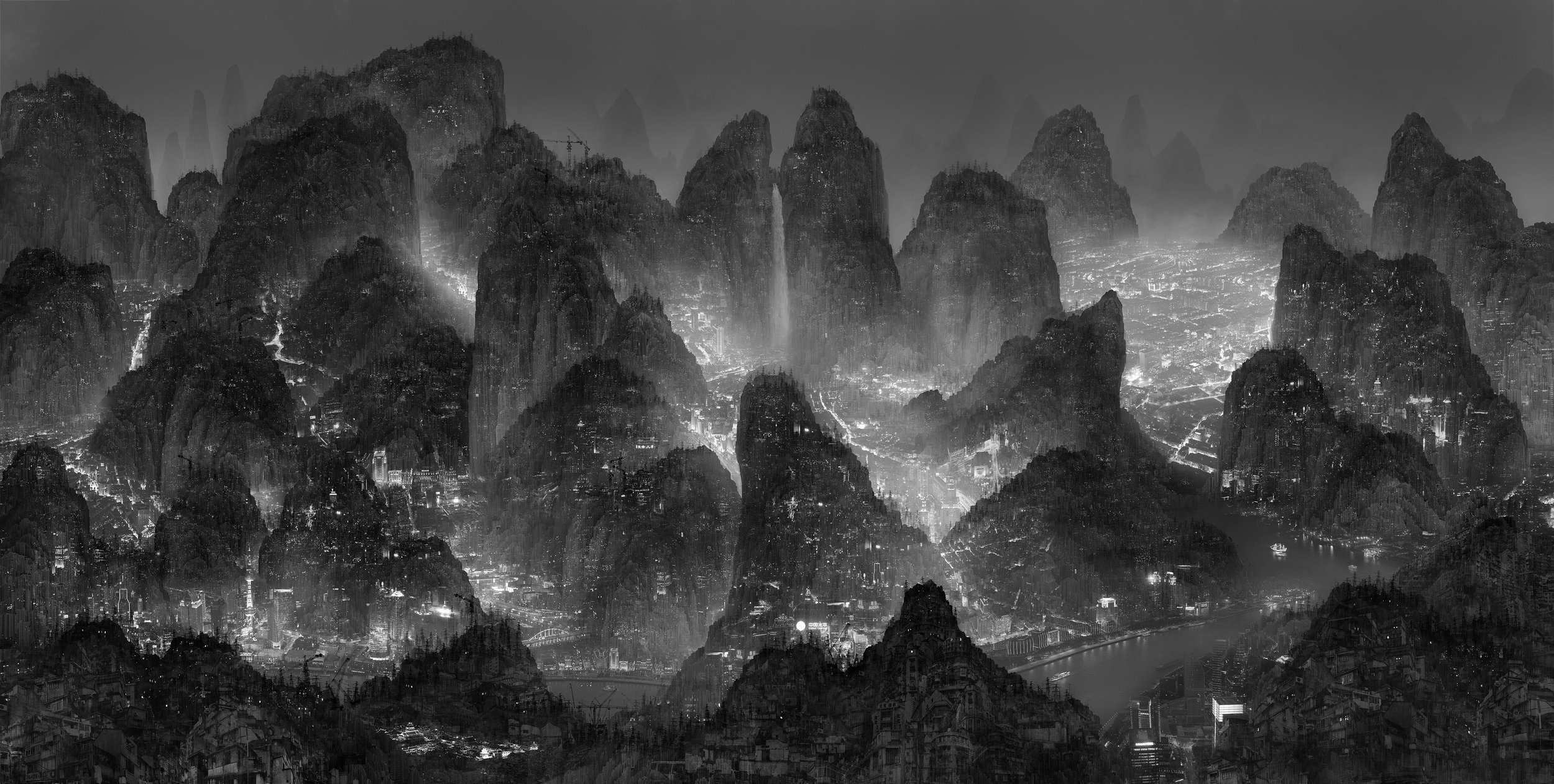
| | Peach Blossom Collony, 2011, ed. 3, 85 x 234 cm, stampa Epson Ultra Giclée su carta Epson Hot Press Natural Peach Blossom Collony, 2011, ed. 3, 85 x 234 cm, Epson Ultra Giclee Print on Epson Hot Press Natural |
L'Illusione Ottica e il Peso del Dettaglio Urbano
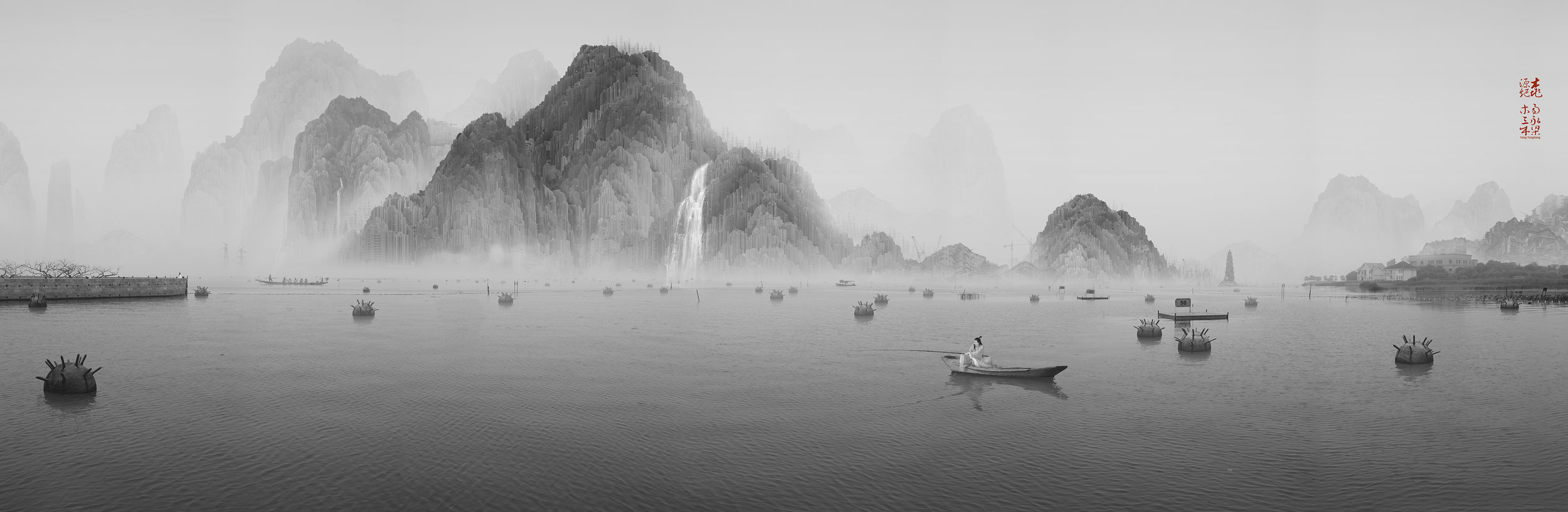
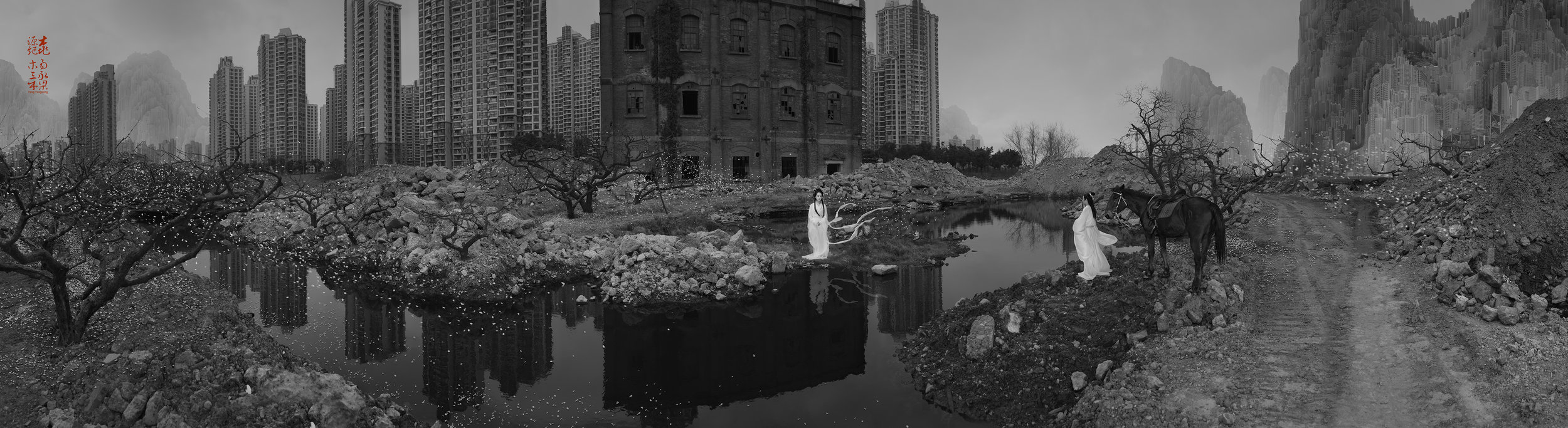
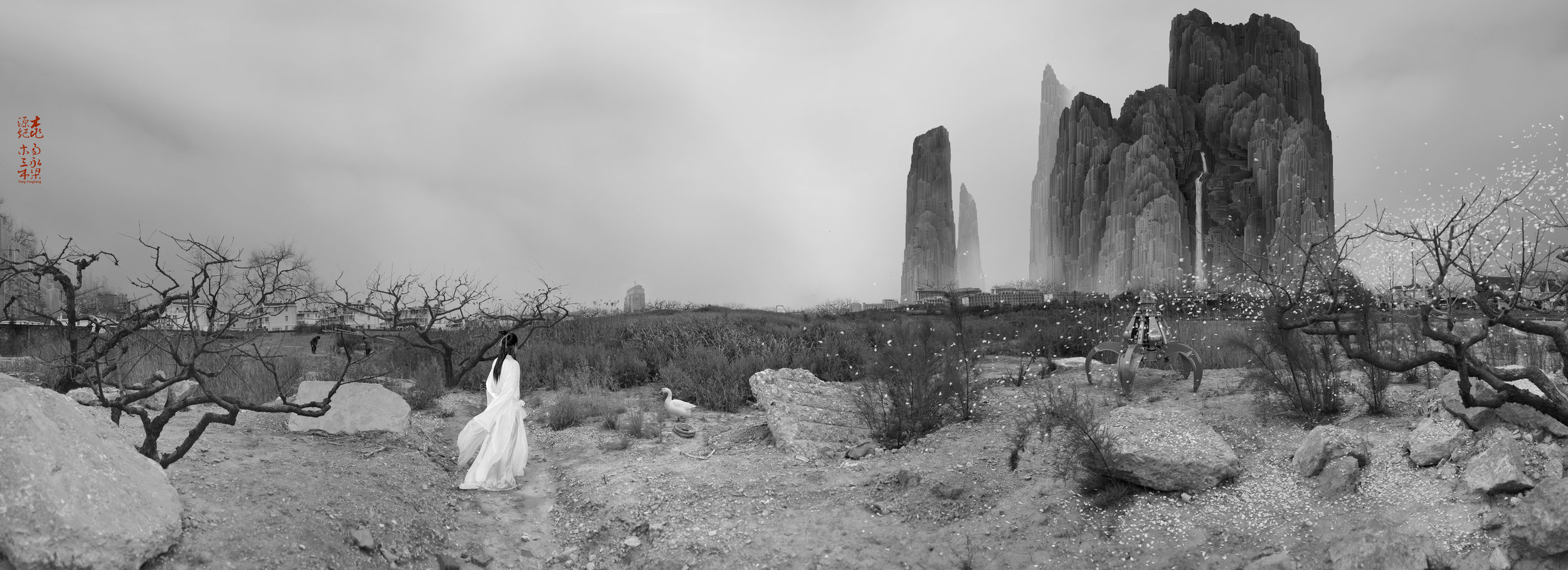
The Optical Illusion and the Weight of Urban DetailL'esperienza visiva davanti a quest'opera si configura come un esercizio di pura seduzione intellettuale basato su un contrasto formale sbalorditivo. Da lontano, l'immagine rapisce lo sguardo per il suo lirismo quasi mistico e senza tempo. Si vedono montagne maestose che emergono da nebbie impalpabili, cascate che scendono silenziose tra i picchi rocciosi, alberi secolari che si arrampicano sui costoni e specchi d'acqua immobili che invitano alla meditazione più profonda. L'atmosfera generale è rarefatta, classica, solenne. Tuttavia, quando ci si avvicina a pochi centimetri dalla superficie della stampa fine art, avviene lo shock visivo che ha reso l'artista un punto di riferimento in tutto il mondo. Quella che da lontano appariva come roccia millenaria modellata dal vento si rivela essere una stratificazione spaventosa e brulicante di grattacieli identici, piloni elettrici, viadotti autostradali, ciminiere e complessi industriali. La nebbia poetica che avvolge le valli non è vapore naturale, ma la cappa pesante dello smog che soffoca le odierne metropoli asiatiche. I rami degli alberi si confondono con le braccia meccaniche delle gru da cantiere, e i sentieri un tempo percorsi dai vecchi saggi sono ora solcati da camion, ruspe e macerie. L'artista non ricorre all'intelligenza artificiale; fotografa personalmente per mesi ogni singolo dettaglio, ogni cantiere e ogni edificio della Cina in trasformazione, per poi assemblare meticolosamente migliaia di scatti in un collage digitale monumentale la cui gestazione richiede mesi di straordinaria perizia tecnica. The visual experience in front of this artwork takes the form of an exercise in pure intellectual seduction based on a stunning formal contrast. From a distance, the image captures the gaze with its almost mystical and timeless lyricism. One sees majestic mountains emerging from impalpable mists, waterfalls descending silently between rocky peaks, ancient trees climbing the ridges, and still mirrors of water inviting deep meditation. The general atmosphere is rarefied, classical, and solemn. However, when one approaches within a few centimeters of the fine art print surface, the visual shock that has made the artist a global reference occurs. What appeared from afar as ancient rock shaped by the wind reveals itself to be a frightening and teeming stratification of identical skyscrapers, power pylons, highway viaducts, smokestacks, and industrial complexes. The poetic mist enveloping the valleys is not natural vapor, but the heavy shroud of smog suffocating modern Asian metropolises. The branches of the trees blend with the mechanical arms of construction cranes, and the paths once walked by ancient sages are now furrowed by trucks, bulldozers, and debris. The artist does not resort to artificial intelligence; he personally photographs every single detail, construction site, and building of China in transformation for months, meticulously assembling thousands of shots into a monumental digital collage that requires months of extraordinary technical expertise.
| | Enjoyment Of The Moonlight, 2011, ed. 3, 82 x 225 cm, stampa Epson Ultra Giclée su carta Epson Hot Press Natural Enjoyment Of The Moonlight, 2011, ed. 3, 82 x 225 cm, Epson Ultra Giclee Print on Epson Hot Press Natural | Una Critica Silenziosa e il Consenso Istituzionale
A Silent Critique and Institutional AcclaimIl successo planetario di Yang Yongliang risiede proprio in questa sua straordinaria capacità di non urlare e di non cedere a una protesta ecologica banale o didascalica. La sua è una critica silenziosa, condotta con le armi della grande bellezza e del rigore compositivo. Attira lo spettatore attraverso l'armonia rassicurante della tradizione e poi lo mette brutalmente davanti allo specchio della modernità, mostrando come il progresso cieco stia esaurendo non solo il paesaggio fisico, ma l'anima spirituale di un intero popolo. Oggi, l'importanza storica del lavoro di Yang Yongliang è ampiamente sancita dalle più importanti istituzioni museali del globo, che hanno inserito le sue visioni digitali all'interno delle loro collezioni permanenti. Le sue opere sono entrate a far parte di templi dell'arte del calibro del British Museum di Londra, del Metropolitan Museum of Art di New York, del Museum of Fine Arts di Boston, della Art Gallery of New South Wales a Sydney e del prestigioso M+ Museum di Hong Kong. Questo immenso riconoscimento istituzionale posiziona l'artista stabilmente tra i grandi maestri contemporanei che hanno saputo utilizzare il mezzo tecnologico per ridefinire i confini della fotografia d'avanguardia e della videoarte. The global success of Yang Yongliang lies precisely in this extraordinary ability not to shout and not to yield to a banal or didactic ecological protest. His is a silent critique, conducted with the weapons of great beauty and compositional rigor. He attracts the viewer through the reassuring harmony of tradition and then brutally places them in front of the mirror of modernity, showing how blind progress is exhausting not only the physical landscape but the spiritual soul of an entire people. Today, the historical importance of Yang Yongliang's work is widely sanctioned by the world's most prominent museum institutions, which have included his digital visions within their permanent collections. His works have become part of art temples of the caliber of the British Museum in London, the Metropolitan Museum of Art in New York, the Museum of Fine Arts in Boston, the Art Gallery of New South Wales in Sydney, and the prestigious M+ Museum in Hong Kong. This immense institutional recognition firmly positions the artist among the great contemporary masters who have successfully used the technological medium to redefine the boundaries of avant-garde photography and video art.
| | The landscape without Night, 2013, ed. 7, 105 x 210 cm, Stampa Epson Ultra Giclée su carta Hanhemuhle Photo Rag Baryta Fineart The landscape without Night, 2013, ed. 7, 105 x 210 cm, Epson Ultra Giclee print on Hanhemuhle Photo Rag Baryta Fineart Paper | Un Dialogo Aperto con la Visione dell'Artista
An Open Dialogue with the Artist's VisionI grandi artisti si riconoscono dalla capacità di rendere visibile l'invisibile, e Yang Yongliang ci riesce mostrando le macerie del nostro tempo travestite da paradiso incontaminato. Peach Blossom Colony resta un monito visivo di rara potenza, che ricorda come ogni centimetro di cemento gettato nel mondo rischi di cancellare per sempre un pezzo del nostro giardino interiore. Per coloro che desiderano approfondire l'universo dell'artista e sono interessati a valutare le sue opere e la carriera che svolge, la Galleria mette a disposizione la propria esperienza: è possibile richiedere il catalogo delle opere disponibili. Great artists are recognized by their ability to make the invisible visible, and Yang Yongliang succeeds by showing the ruins of our time disguised as an pristine paradise. Peach Blossom Colony remains a visual warning of rare power, reminding us how every centimeter of concrete poured into the world risks erasing a piece of our inner garden forever. For those who wish to delve deeper into the artist's universe and are interested in evaluating his works and the career he pursues, the Gallery offers its expertise: it is possible to request the catalog of available works.
| | Appreciation of the waterfall, 2011, ed. 5, 52 x 211 cm, stampa Epson Ultra Giclée su carta Epson Hot Press Natural Appreciation of the waterfall, 2011, ed. 5, 52 x 211 cm, Epson Ultra Giclee Print on Epson Hot Press Natural | | | | SETTEMBRE | SEPTEMBER 2026 MC2GALLERY, Via Maroncelli 7 - Milan, Italy | | | | | |
|
|