Tuesday, October 13, 2020

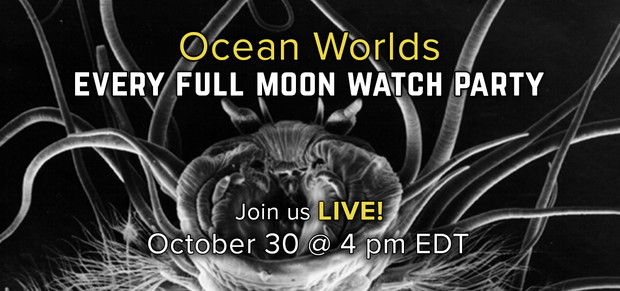
NOAA Ocean World, October 30th. Every Full Moon Watch Party 4PM, looks like fun!

NOAA Logo

OCEAN TODAY

Ocean Worlds

Join the NOAA/NASA science and exploration crews in the deep ocean as they work together to reveal how life can live outside of the Goldilocks zone...in some of the harshest conditions on earth. Their mission is intensifying as we continue our search for signs of other life in the universe. 

  • Discover “out of this world” creatures and phenomena in the Earth’s deep ocean. 
  • Visit underwater volcanoes and thermal vents. Areas we never believed life could live, but does. 
  • Maybe life on Mars or Europa exists - just not in conditions that we have traditionally believed could support life.
  • Have an opportunity to get your questions answered live by NOAA and NASA experts!

Ocean Worlds

Every Full Moon Watch Party

SAVE THE DATE 

Air Date: Friday October 30, 2020
Time: 4:00 PM Eastern (live)
Length: 60 minutes

Register Now. Seats are Limited

Event Registration

#noaa#fineartmagazine#oceanfun

Join NOAA Planet Stewards at our first Book Club meeting of the 2020-2021 academic year.

NOAA Planet Stewards Banner

Join NOAA Planet Stewards at our first Book Club meeting of the 2020-2021 academic year.

We will be meeting on Monday October 19, 2020 at 8:00 pm Eastern Time to discuss:

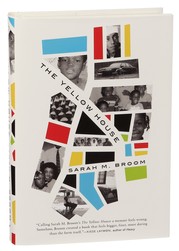
The Yellow House

Didn't read the book? That's OK. Dial in and listen to the discussion. 

You can find more information about the Book Club 

and see our lineup for the entire 2020-2021 academic year here.

The discussion is open to all who want to join.

Dial 866-662-7513 (toll free) 

Then, use the pass code: 1170791#

Please share this invitation to all interested colleagues and networks

The Yellow House

The Yellow House was written by Sarah M. Broom, and won the 2019 National Book Award in Nonfiction. Read an interview with the author.

A book of great ambition, Sarah M. Broom’s The Yellow House tells a hundred years of her family and their relationship to home in a neglected area of one of America’s most mythologized cities. This is the story of a mother’s struggle against a house’s entropy, and that of a prodigal daughter who left home only to reckon with the pull that home exerts, even after the Yellow House was wiped off the map after Hurricane Katrina. The Yellow House expands the map of New Orleans to include the stories of its lesser known natives, guided deftly by one of its native daughters, to demonstrate how enduring drives of clan, pride, and familial love resist and defy erasure. Located in the gap between the “Big Easy” of tourist guides and the New Orleans in which Broom was raised, The Yellow House is a brilliant memoir of place, class, race, the seeping rot of inequality, and the internalized shame that often follows. It is a transformative, deeply moving story from an unparalleled new voice of startling clarity, authority, and power.

Discussion Questions for the meeting:

1. At the opening of the story, Sarah Broom describes the lot where the Yellow House once stood from fifteen thousand feet above. Have you ever brought up a Google Earth image of your house from above and zoomed out? What impact did seeing your home, your street, your state, your country have on your perspective?

2. What are the truths we think we know about New Orleans compared to the story Broom tells?

3. The author refers to Hurricane Katrina throughout as “the Water.” Why do you think she made this choice? What does that term communicate to you?

4. What information does Broom give us about the fate of New Orleans’s population after the storm that was new to you?

5. Broom’s family dispersed after Katrina and many did not return. What effect do you think this kind of scattering after climate crises has on regional culture?

6. In many ways, this is a story of how America has failed African Americans. Was there anything that could have been done differently on the swath of land in New Orleans East that would have changed the outcome?

7. Did this book bring to mind stories from your history tied to a special place, a home, land, or city?

8. There were many powerful stories within the book. Was there one that stood out for you?

9. Sarah says that “Big changes, the ones that reset the compass of a place, never appear so at the outset. Only time lets you see the accumulation of things.” Can you cite an example of this in the book or in your own life’s experience?

10. What are your thoughts about the end of the book? Were you satisfied with the final actions of the land that the Yellow House sat on? Was justice served to the family that lost their Yellow House?

If you'd like to see the books and discussion questions from previous NOAA Planet Stewards Book Club meetings, check out out our  Book Club Archives Page!

Sign up to the NOAA Planet Stewards email list to receive our bimonthly newsletter The Watch. It's the best way to keep up to date on all NOAA Planet Stewards happenings, and get the latest information on upcoming educator and student opportunities, meetings, workshops and much, much, more!

Planet Stewards jpg
#noaaplanetstewards#fineartmagazine#funreading

Andy Warhol Museum Announces New Hours.


The Andy Warhol Museum Announces New Hours

The Andy Warhol Museum will have new hours starting on Sunday, November 1, 2020. The new hours are as follows:
  • Monday, 10 a.m.–5 p.m.*
  • Tuesday, Closed
  • Wednesday, 10 a.m.–5 p.m.
  • Thursday, 10 a.m.–5 p.m.
  • Friday, 10 a.m.–10 p.m.
  • Saturday, 10 a.m.–5 p.m.
  • Sunday, 10 a.m.–5 p.m.
*Mondays, 10 a.m.–12 p.m., are reserved for those in our community who are most at risk– seniors, visitors with disabilities, or those with compromised immune systems. We ask that other visitors respect these dedicated hours.
 
For the health and safety of the community, the use of timed ticketing for all visitors, including members, will continue to be in effect. Visit warhol.org/health-and-safety for The Warhol’s health and safety protocols.
The Andy Warhol Museum
Located in Pittsburgh, Pennsylvania, the place of Andy Warhol’s birth, The Andy Warhol Museum holds the largest collection of Warhol’s artworks and archival materials and is one of the most comprehensive single-artist museums in the world. The Warhol is one of the four Carnegie Museums of Pittsburgh. Additional information about The Warhol is available at warhol.org.

The Warhol receives state arts funding support through a grant from the Pennsylvania Council on the Arts, a state agency funded by the Commonwealth of Pennsylvania; the National Endowment for the Arts, a federal agency; and The Heinz Endowments. Further support is provided by the Allegheny Regional Asset District.

Carnegie Museums of Pittsburgh
Established in 1895 by Andrew Carnegie, Carnegie Museums of Pittsburgh is a collection of four distinctive museums: Carnegie Museum of Art, Carnegie Museum of Natural History, Carnegie Science Center, and The Andy Warhol Museum. The museums reach more than 1.4 million people a year through exhibitions, educational programs, outreach activities, and special events.
        
Copyright © 2020 Carnegie Museums of Pittsburgh, All rights reserved.
You opted into a Carnegie Museums of Pittsburgh press list.

The Andy Warhol Museum
One of the four Carnegie Museums of Pittsburgh

warhol.org
#andywarhol#fineartmagazine#funart

Monday, October 12, 2020

Jim Dine's 85th birthdat, exhibition, Paris,

#jimdine#fineartmagazine#fineartfun


Photographs: Ecotone is now part of the Cnap collection.

sweet news

Ecotone is now part
of the Cnap collection


I am super happy and honored to let you all know that these 2 pieces from Ecotone, are now part of the public collection of Cnap (Centre National des Arts Plastiques).

Cnap is one of the main operators of the French Ministry of Culture. Its mission is to support and promote contemporary art.
On behalf of the State, the Cnap acquires artworks for one of the most important French public collections, which it made available to cultural institutions in France and abroad. The collection includes more than 102,500 pieces acquired over more than two centuries from living artists.
Ecotone is one of the 83 proposals selected over 603, during the exceptional acquisition commission related to the current health crisis.


Find out more about CNAP's collection
Find out more about my Art

upcoming photo festival

Ecotone + InCadaques

#fineartmagazine#funart#cnap

Friday, October 9, 2020

Catch the Art Basel online Conversation with Cao Fei & Hans Ulrich Obrist October 15th, 2020

WORDS, WORKS, WORLDS
Recent works by Sophie Bouvier Ausländer 
Open Day: Saturday 10 October, 12-4pm
Please RSVP if you would like to attend.

7 October - 12 December 2020
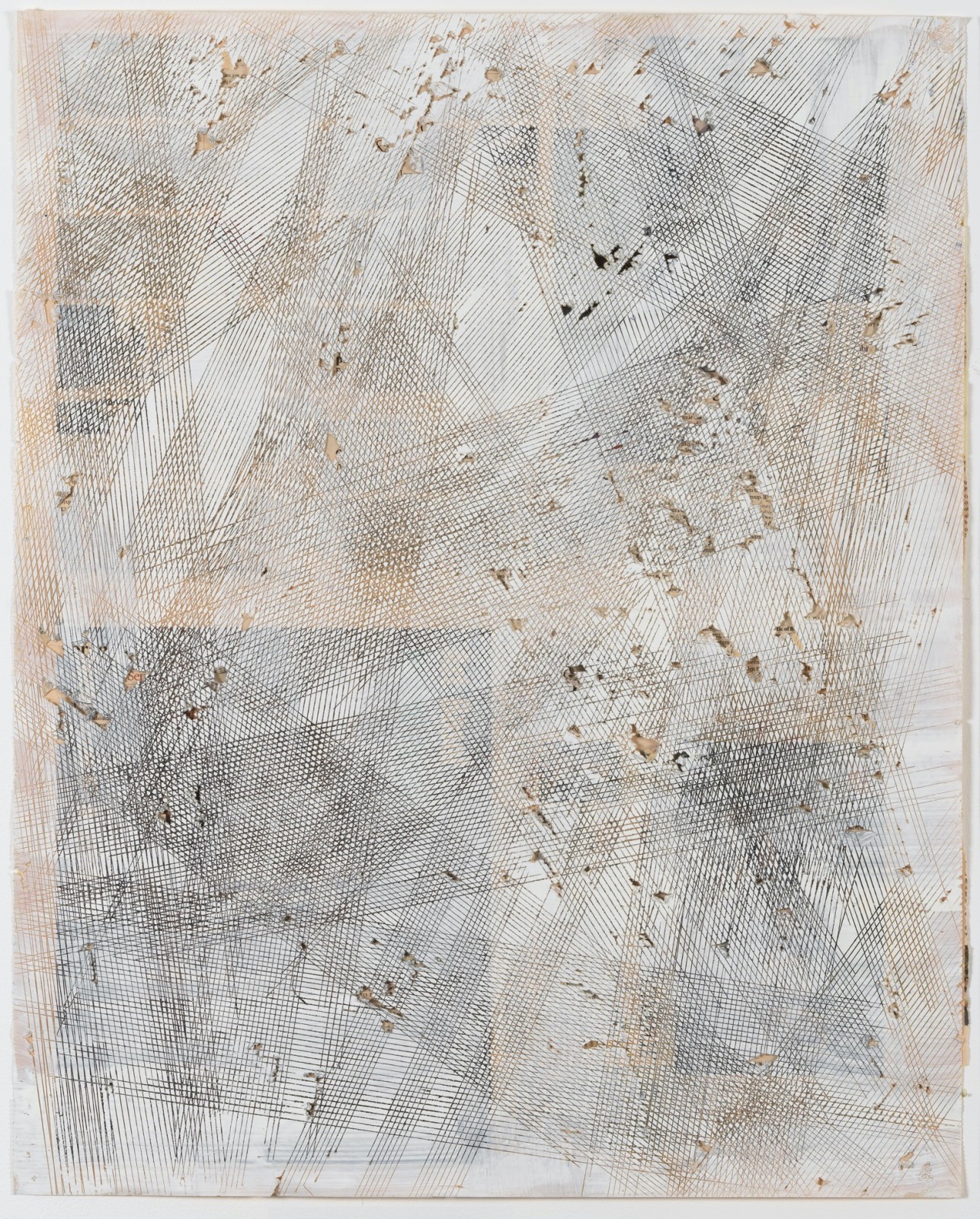
How do you feel? / The Financial Times series (SBAFT20200302), gouache on waxed newspaper, 66 x 53 cm, 2020
Much time of Sophie Bouvier Ausländer’s past years has been dedicated to words, namely her PHD at Slade London, culminating in her doctoral thesis on the notion of tangibility, contemporary reliefs and continuous dimensions. 

The topic ties in with Bouvier’s preeminent, multi-faceted interest in our planet as a sculpture, present in all her bodies of work, and underlines the importance of understanding our world from an artistic viewpoint. Making Worlds, the title of Daniel Birnbaum’s 2006 Biennale, expressed the desire to launch a new beginning from existing parameters, a credo Bouvier very much shares. To complement her thesis at Slade, Bouvier presented a work not surprisingly entitled Ways of World Making\Self Portrait. 

A freestanding, octagonally shaped library, it consists of all the publications she read and researched to nourish her thesis. Every book has an individually created opening within a structure of connected yet moveable walls that can be experienced while navigating around it. An autobiographical sculpture, visually permeable, whose information is accessible beneath the surface, while having to dig deeper to explore its depths and mysteries. 

Bouvier Ausländer has simultaneously refined her map series, submitting her new series to comparable, and familiar, modes of digging and revealing. The series entitled Radar employs aerial maps, inspired by the gift of a collector friend. Diagonal corridors that simulate flight routes abandon the grid often prevalent in her former Avalanche series. The map’s differing function as a route map sparked visual shifts resulting in dynamic, interlacing compositions. The historical notion of navigating only “as far as you can see” chimes with current times of obscured views into the future. In her new series Bouvier reworks the surfaces vigorously, adding colour or darkening it by reheating. The outcome are deeper and varying tonalities within pulsating and more dexterous images, whose handling and flaking, extraction and revelation process consequently intensifies. In her Austerlitz series Bouvier reuses the crumbling paint parts, a sediment of the artistic process, to apply them on tissue paper and mirror the elaborated map as a fragile negative. Recently Bouvier moved from aerial to geological and topographical maps, which reveal more contrasting colour charts when worked on and exposed. Endorsing the actions of layering and erosion, Bouvier began to superimpose colour flakings of different works, rendering the “geology” of her oeuvre increasingly complex. 

Since Covid-19, Bouvier has worked on a new series entitled The Financial Times series, emulating the freer use of colour and gestures. Skin coloured papers, containing news on our global instability, are again covered, then harmed and laid bare, yet simultaneously recharged, rearranging our post-pandemic world and vision.
 
Government guidelines will be followed. 
For appointments please contact the gallery at info@patrickheide.com or +44 (0)20 7724 5548
Patrick Heide Contemporary, 11 Church St., London.
#patrickhydegallery#fineart#funart