|
Saturday, September 28, 2013
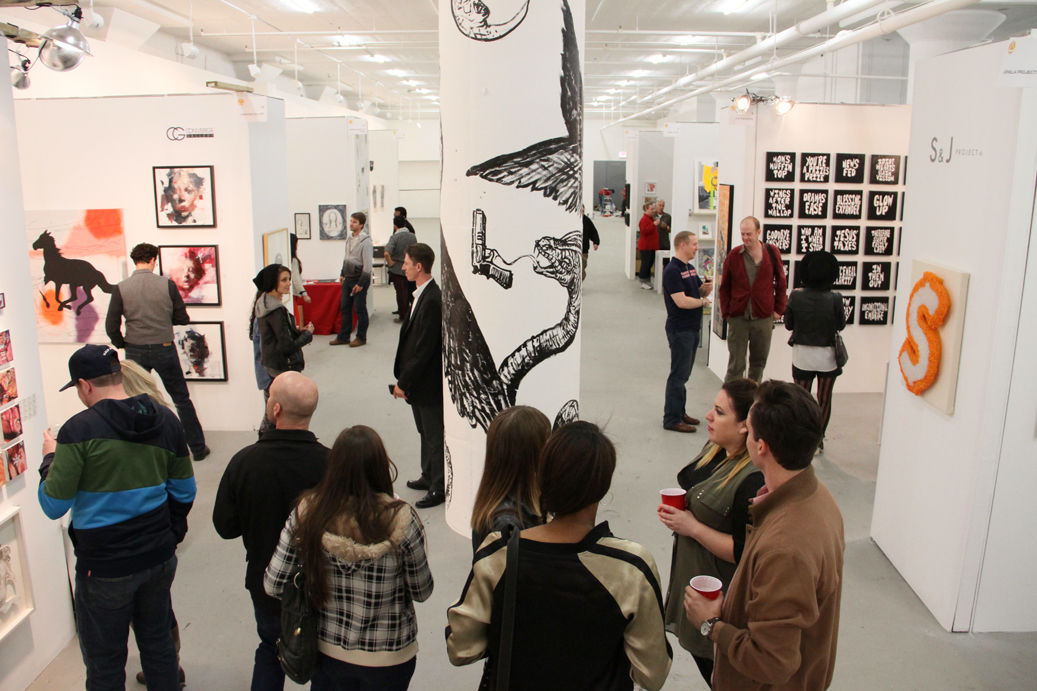
FOUNTAIN ART FAIR’S FIRST CHICAGO SATELLITE FAIR A SUCCESS


New York Film Festival Al Transmedia Experience
**NEW YORK FILM FESTIVAL TRANSMEDIA EXPERIENCE**
WORLD PREMIERE OF ELINE JONGSMA’S AND KEL O’NEILL’S EMPIRE

**Join us for a special filmmaker-guided press tour of EMPIRE on Saturday, September 28th at 3pm at Lincoln Center followed by a panel discussion moderated by Nicolas Rapold at 4pm**
Read the VICE interview with the filmmakers here:
Building on the success of last year’s debut, the second edition of the New York Film Festival Convergence transmedia section will feature the world premiere of Eline Jongsma and Kel O’Neill’s EMPIRE.
Shot in ten countries over four years, EMPIRE employs a broad range of storytelling techniques—including nonfiction filmmaking, multi-channel video projection, and experience design—to unearth the contemporary aftershocks of the world's first brush with global capitalism.
By turns epic and intimate in its approach, EMPIRE explores the ways in which the conditions of past continue to define our lives in the present.
A hidden synagogue in the mountains of Indonesia. A Dutch-style village in the Sri Lankan rainforest. A white separatist enclave in the South African desert. These are just a few of the communities brought to light in EMPIRE, an immersive documentary project that examines the still-unfolding legacy of Dutch colonialism.
EMPIRE videos and installations will be on display September 28 – 30 throughout NYFF at several venues on the Lincoln Center campus including the Film Center, Walter Reade Theater, and Alice Tully Hall. Viewers are invited to chart their own course through the work, and to draw their own thematic connections as they go and then join Directors Eline Jongsma and Kel O’Neill for a discussion about the genesis of this one of a kind experiential documentary.
Please join directors Eline Jongsma and Kel O’Neill in a special guided press tour of the project on Saturday, September 28th at 3pm. Participants in the tour are asked to meet in the lobby of the Elinor Bunin.
Eline & Kel will also be participating in a discussion with Nicolas Rapold about the genesis of this one of a kind experiential documentary at 4pm on Saturday, September 28th at the Elinor Bunin amphitheater. Press are welcome to attend.
To request a press pass to the tour and/or panel discussion, or if you are interested in an interview with the directors please email Gerilyn@Brigademarketing.com
ABOUT THE FILMMAKERS

Eline Jongsma & Kel O’Neill are a married Dutch-American filmmaking team focused on cross-platform storytelling. They work as a two-person crew, and film, edit, research and produce all of their work by themselves. They spent 2010-2013 travelling more than 140,000 kilometers by car, boat and airplane through Asia, Africa, Oceania and the Americas while filming Empire. Before creating Empire, Eline and Kel were the US Correspondents for VPRO Television’s Prix Europa-winning documentary series “Metropolis.” Their journalism work has appeared in the Huffington Post, Vice and The Creators Project. Their videos and installations have been presented by museums, galleries and festivals throughout the world, including: the Los Angeles Film Festival (LAFF); the International Documentary Film Festival Amsterdam (IDFA); the International Architecture Biennale Rotterdam (IABR); Apex Art, New York; Stevenson Gallery, Cape Town; Jogja National Museum, Yogyakarta; Khoj, New Delhi; and CBK Zuidoost/Stedelijk Museum Bureau Amsterdam (SMBA). Before they began working together, Eline worked as a fine art photographer, and Kel worked as an actor in independent film.
ABOUT NYFF CONVERGENCE
Focusing on the intersection of technology and storytelling, NYFF Convergence offers audiences and creators the unique opportunity to experience a curated selection of some of the most exciting immersive storytelling projects being produced today.
Focusing on the intersection of technology and storytelling, NYFF Convergence offers audiences and creators the unique opportunity to experience a curated selection of some of the most exciting immersive storytelling projects being produced today.
For more information please visit:
#fineartmagazine
Friday, September 27, 2013
National Endowment for the Arts Presents Highlights from the 2012 Survey of Public Participation in the Arts
The latest survey explores five areas of arts engagement
WASHINGTON, DC—How do Americans participate in the arts in the course of a year? What kinds of art forms and activities do they engage with, and in what numbers? The NEA investigates these questions and more in the 2012 Survey of Public Participation in the Arts (SPPA), the nation’s largest population survey of arts participation trends. Today the NEA released an initial report of the survey's findings. A more comprehensive report will be available in 2014.
“One of the most important things we can do as the National Endowment for the Arts is to understand how our nation engages with the arts,” said NEA Senior Deputy Chairman Joan Shigekawa. “This iteration of the Survey of Public Participation in the Arts is our most comprehensive look yet at the myriad ways art works for Americans.”
A Yardstick for Arts Engagement
The NEA has partnered with the United States Census Bureau six times since 1982 to conduct the SPPA. The 2012 survey asked a nationally representative sample of adults ages 18 and older if they had participated in five broad categories of arts activity in the past year: attending, reading, learning, making/sharing art, and consuming art via electronic media.
Within the arts attendance category, the survey collected data on performing arts events; art museums, galleries, and visual arts events; destinations with historic or design value; and movies. In the reading category, the survey measured reading rates for literature (novels or short stories, poetry, and plays), as well as reading rates for any book (fiction or nonfiction) outside of school or work. The art-making or art-sharing category gathered data on dance; photography; various types of music; film/video; the fiber arts; leatherwork, metalwork, and woodwork; scrapbooking; creative writing and books in general; the visual arts; pottery, ceramics, and jewelry-making; theater; and opera. The survey also asked about electronic consumption of books and literature, the visual arts, dance, theater, opera, and various types of music. In addition, the survey asked people if they had taken an arts class or lesson in or out of school, or had learned arts subjects through some other means.
For the 2012 survey, the NEA doubled the sample size in order ask more questions and discover new patterns of arts engagement. The NEA developed the new questions through dialogues with researchers, policymakers, and practitioners in the arts. Since the survey captures more art forms, it also captures more people who are participating in the arts.
Key Findings
This initial analysis of the 2012 SPPA shows that large segments of the U.S. adult population reported taking part in at least one kind of arts activity. A closer look at the data reveals subtle shifts in demographic and behavioral patterns that occurred since 2008, the previous survey year.
Art and Electronic Media
- More than two-thirds of American adults (71 percent or 167 million) accessed art via electronic media, including TV, radio, handheld or mobile devices, the Internet, and DVDs, CDs, tapes, or records.
- Music viewing and/or listening is the most popular form of media arts participation—whether on TV, radio, or the Internet. Fifty percent of adults used TV or radio to watch or listen to music, and 29 percent used the Internet to watch, listen to, or download music.
- Mobile devices appear to narrow racial/ethnic gaps in arts engagement. Whether listening to music, looking at a photo, or watching a dance or theater performance, all racial/ethnic groups show roughly the same rates of engagement via mobile devices.
Attending Arts Events and Activities
- Nearly half of the nation's adults (49 percent or 115 million) attended at least one type of visual or performing arts activity. Fifty-nine percent of adults attended at least one movie, an activity that increased substantially among most demographic subgroups.
- Musical play attendance saw the first significant drop since the 1985 SPPA: a 9 percent rate of decline from 2008 to 2012. Non-musical play attendance fell at a 12 percent rate over the same period. Museum-going also saw a decline: 21 percent of adults (or 47 million) visited an art museum or gallery in 2012, down from 23 percent in 2008.
- Non-white and Hispanic Americans saw no declines in their arts attendance rates from 2008 to 2012; on the contrary, they even saw increases in some categories. In 2012, African Americans outpaced whites' attendance rates at jazz events.
- Festivals show promise as entry points to the arts. One in four younger adults (ages 18-24) attended an outdoor performing arts festival in 2012, up from 22 percent in 2008.
Art-Making and Art-Sharing
- About half of the nation's adults created, performed, or shared art of various types. Social dancing is the most popular form of art-making or art-sharing; nearly one in three adults (32 percent) danced at weddings, clubs, or other social settings. Young adults and Hispanic Americans are the most avid dancers; 40 percent of 18-34 year olds and 36 percent of Hispanics reported social dancing.
- One in four adults (26 percent) e-mailed, posted, or shared photography in 2012. One in five adults (21 percent) e-mailed, posted, or shared music. Fifteen percent shared their own photos, and 13 percent shared film or videos. Thirteen percent did photo editing, and 12 percent did photography for artistic purposes.
- In this category, the fiber arts were among the most popular. Thirteen percent of adults reported participating in weaving, crocheting, quilting, needlepoint, knitting, or sewing in 2012. Twelve percent of adults played a musical instrument. Nine percent reported singing, either alone or with others, and 8 percent created leatherwork, metalwork, or woodwork.
Reading Books and Literature
- More than half of American adults read a work of literature or a book (fiction or nonfiction) not required for work or school. However, adults' rates of literary reading (novels or short stories, poetry, and plays) dropped back to 2002 levels (from 50 percent in 2008 to 47 percent in 2012).
- Older Americans (65 and older) now have higher rates of literary reading than any other adult age group.
Arts Education
As of 2012, roughly half of all adults had experienced some arts learning at some point in their lives, whether through classes or lessons, in or out of school, or outside of formal instruction. But disparities persist by gender, race/ethnicity, and level of general education. For example, a college graduate is nearly twice as likely to have taken an art class or lesson in childhood than a high school graduate (59 percent compared to 32 percent). Meanwhile, adults of all racial and ethnic backgrounds reported similar rates of taking arts classes or lessons in the last year.
- The most popular classes adults reported taking in childhood (in or out of school) were voice training or playing an instrument (36 percent), visual arts (19 percent), and art appreciation or art history (18 percent).
- A new, more inclusive question about arts education reveals more arts participants than before. Fifty-six percent of adults reported that they received arts education at some point in their lives—whether through classes, lessons, or through informal instruction (from friends, family tradition, or teaching oneself). This compares to the 49 percent who reported having taken formal instruction (a class or lesson, in or out of school) at some point in their lives. The most popular informal learning experiences were voice training or playing an instrument (18 percent), dance (16 percent), photography or filmmaking (13 percent), and music appreciation (11 percent).
Next year, the NEA will release a full report with in-depth findings including more geographic and demographic details for arts engagement among U.S. adults. Beyond today's highlights report, the entire survey questionnaire, raw data, and user's guide are available to researchers and the public atarts.gov.
The SPPA Challenge: Presenting Arts Data Artfully
Big data presents big challenges, and the SPPA is no exception. Consequently, the NEA is issuing a challenge to create interactive visualization tools to make the 2012 SPPA more accessible to the public. This challenge seeks to help researchers, academics, and the media explore and explain the reach of the arts in American life. More than $20,000 will be awarded to select contestants; learn more when the SPPA Challenge goes live on September 30 at Challenge.gov.
NEA Art Works: Research Grants
The SPPA and its host survey instrument, the Current Population Survey, include a wealth of demographic information that can be mined for detailed characteristics of arts participants. Researchers are encouraged to analyze the SPPA through the NEA Research: Art Works grant program; the next deadline is November 5.
About NEA Research
The NEA is the only federal agency to conduct long-term and detailed analyses of arts participation. For more than 30 years, the NEA Office of Research & Analysis has produced periodic research reports, brochures, and notes on significant topics affecting artists and arts organizations, often in partnership with other federal agencies such as the U.S. Census Bureau and the Bureau of Labor Statistics. The NEA is committed to extending the conversation about arts participation by making data available to both the research community and the public at large.
About the National Endowment for the Arts
The National Endowment for the Arts was established by Congress in 1965 as an independent agency of the federal government. To date, the NEA has awarded more than $4 billion to support artistic excellence, creativity, and innovation for the benefit of individuals and communities. The NEA extends its work through partnerships with state arts agencies, local leaders, other federal agencies, and the philanthropic sector. To join the discussion on how art works, visit the NEA at www.arts.gov.
# # #
#fineartmagazine
Museum of Contemporary Art Chicago
| |||||||||||||||||||||||||||||||||||||||||||||||||||


 ranian playwright Nassim Soleimanpour is a conscientious objector who refused to take part in military service, mandatory for all Iranian men. Forbidden to travel, Soleimanpour turned his isolation to his advantage with an absurdist, highly original play that blends comedy and drama. The MCA Stage co-presents the Midwest premiere ofWhite Rabbit, Red Rabbit with the Chicago Humanities Festival on
Museum of Contemporary Art | 220 E. Chicago Ave | Chicago | IL | 60622
|

Thursday, September 26, 2013
Artist Opportunity
ARTIST OPPORTUNITY
Contact: Annette Bernhardt, Marketing Coordinator, 631.462.5400 x223
Call for Artists: 58th Annual Members’ Exhibition at the Art League of Long Island
The Art League of Long Island seeks entries for their 58th Annual Members’ Exhibition. Current members and artists who join as members are welcome to submit applications for the exhibit showing in two parts: Part One (artist last names A-L) runs from November 10 to December 1 and Part Two (artist last names M-Z) runs from December 15 to January 5.
Original works in 2-D and 3-D in any medium (within certain size specifications), except for video and installation art, can be accommodated in the Art League’s spacious Jeanie Tengelsen Gallery.
Awards of Excellence and Honorable Mentions will be determined by exhibition juror Robert Carter, Professor of Art at Nassau Community College. As an artist/illustrator, his paintings, drawings and illustrations are in great demand by collectors throughout the United States. His work is in the permanent collections of several museums and has been featured in exhibitions across the country.
To obtain prospectus call (631) 462-5400 or download at www.artleagueli.org. Deadline to submit application is October 25, 2013.
#fineartmagazine
Subscribe to:
Comments (Atom)