Showing posts with label artfunlandscapes. Show all posts

Monday, October 26, 2026

The Weather is cool. Halloween is around the corner. I miss summers already. See my reflections below.

My images  below are through the Spring through Fall 2026. I love the Red Quince as one of the first blooms in the garden in early Late March-April. My tree is about 100 plus years old. Through the Summer I wait for the Hamptons Classic on August. This year I capture ~Horse Love~ as the two beauties see each other for the first time in August . The ~Rose of Sharon~ is the last on that tree for the season mid October.  
I live on a creek  where wildlife is diverse. Your back yard no matter where you in a live city, suburbs or have a rural landscape is unique.  We all  vote to actively engage with our surroundings through our actions.  Whether or not we use pesticide, purchase vegetables & fruit grown with NON GMO seeds or use nitrates in our family gardens we are affecting the Environment. I encourage you to look around see what everyday choices you may make to change our world daily.  Jamie Forbes, Publisher, Finetmagazineblog.blogspot.com, SunStormFineartmagazine.com and see the list below  
Find out more about my environmental interest and  more of my photography visit: 


©allrightsreserved/Jamieforbes/SunStormArtsPubishingCo.Inc2026
#jamieellinforbes#backyardenviornmentalists.com#sunstormfineartmagazine.com #fineartmagazineblog.blogspot.com#artfunenviornmenal#artfunlandscapes#artfunnow


Sunday, October 25, 2026

The Yale Center for British Art features on Oct.8,2026 : Artists Talk~Shadows in Nature~ by Painter Sean Scully on the Legacy of John Constable

 THis should be an informative talk by the renowned artists Sean Scully reflecting on the legacy of John Constable. Wednesday October 8th, 5-6 pm  

Thursday, October 22, 2026


Trouble viewing this e-mail? Try our web version.

Audubon Alaska


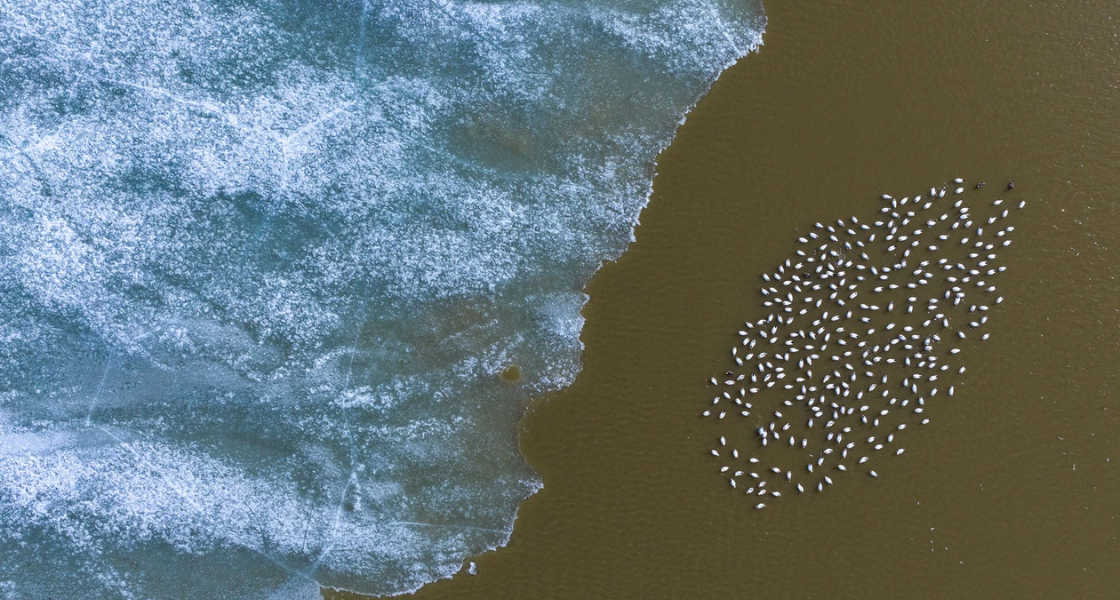
Snow Geese on frozen landscape

Snow Geese use Teshekpuk and nearby lakes to molt after breeding. Photo: Gerrit Vyn

Alaska’s Arctic is a place of extraordinary wildlife, vital habitats, and deep cultural connections—but it’s facing growing pressures from oil and gas development and a warming climate. This month, we’re exploring what’s at stake in the Western Arctic, from the importance of protecting Teshekpuk Lake to the changing challenges facing polar bears and seabirds. Read on to discover why this remarkable landscape matters and how you can help protect its future.
 

Protecting the Future of Alaska’s Western Arctic

Alaska’s Western Arctic is a vital habitat for millions of migratory birds, caribou, polar bears, and other wildlife—and home to Iñupiaq communities whose cultures and subsistence traditions are deeply connected to the land. But proposed changes to federal regulations threaten protections for this ecologically and culturally irreplaceable landscape. This piece breaks down what’s at stake in the 23-million-acre National Petroleum Reserve–Alaska and why its Special Areas, including Teshekpuk Lake, matter.

You can also take action now! Encourage the Bureau of Land Management to protect the Western Arctic’s wildlife, habitats, and communities by submitting a public comment today. Read more here!
 
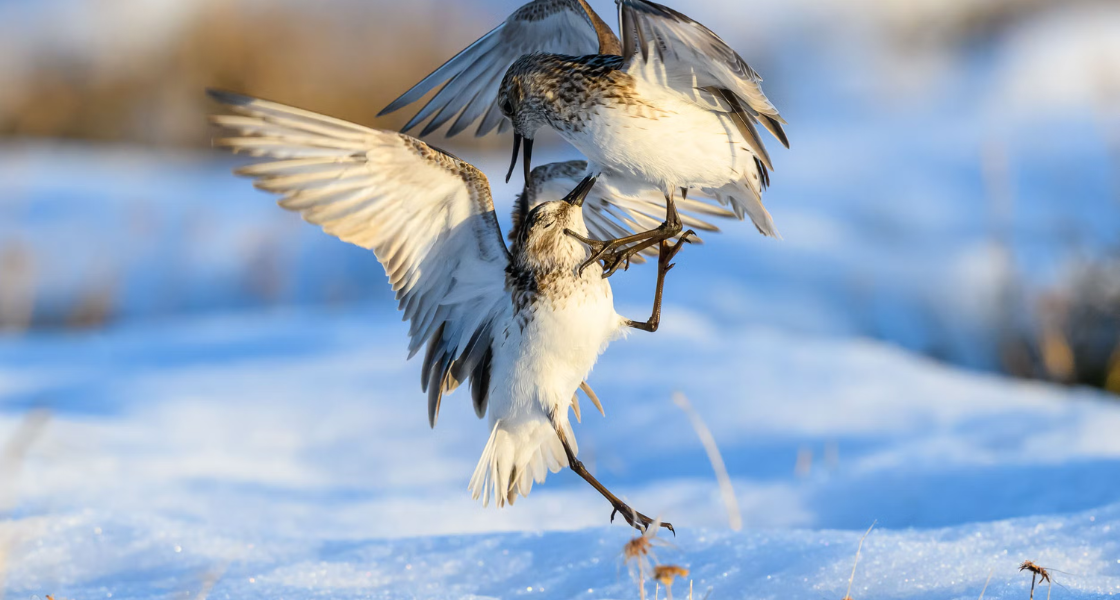
Two shorebirds on snow

Semipalmated Sandpipers spar for nesting grounds after migrating from South America.Photo: Gerrit Vyn

Teshekpuk Lake: A Vital Arctic Haven

What makes Alaska’s Western Arctic worth protecting? This powerful photo essay (featuring imagery from conservation photographer Gerrit Vyn) brings readers to Teshekpuk Lake, one of the world’s most important bird-breeding grounds. Each spring, some 600,000 shorebirds return to its wetlands, which also sustain geese, caribou, polar bears, and Iñupiaq communities.

As oil and gas development threatens this irreplaceable landscape, Audubon CEO Elizabeth Gray reflects on her own journey to Teshekpuk Lake and the connections birds forge across the hemisphere. Together, these stories remind us why protecting Arctic habitat matters far beyond Alaska—and why we must act now. Read more here!
 
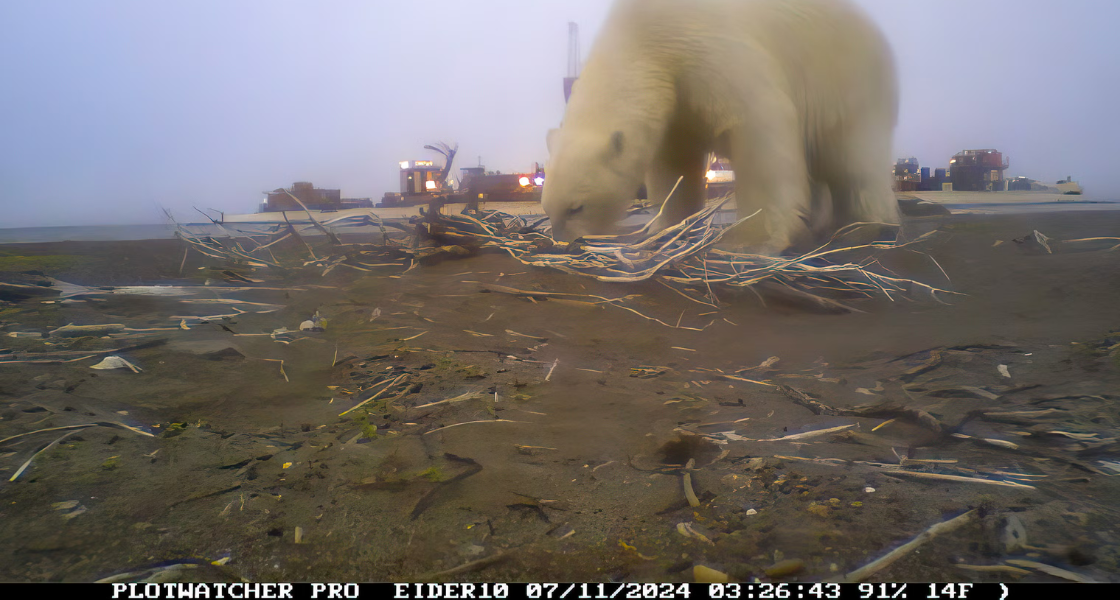
Polar bear with nest on wildlife cam

Remote camera timelapse image documenting a polar bear consuming Pacific Common Eider eggs at a nesting colony on Spy Island, Alaska. Photo: Courtesy of WCS

P.S. A Changing Arctic Food Web

More Arctic content? You got it. As Arctic sea ice disappears, hungry polar bears are increasingly turning to seabird eggs and chicks for food, sometimes wiping out entire nesting colonies. Learn how climate change is reshaping predator-prey dynamics in Alaska’s Arctic. Read here!
 

 Take action today by submitting a comment in support of protecting the Western Arctic's Special Areas, including Teshekpuk Lake. The deadline to comment is November 9.

Take action!

Audubon Alaska
750 West Second Ave., Suite 100
Anchorage, AK 99501 USA
(907) 276-7034 | www.audubon.org/alaska

© 2026 Audubon Alaska

#audubonalaska,#ineartmagazineblog.blogspot.com #sunstormfineartmagazine.com#artfunenviornmenal#artfunalaska#artfunnow#artfunlandscapes#artfunanimals

Tuesday, October 6, 2026

Band of Vices presents the artist Tania Benegas~Where Fiber Becomes Landscape~See details below to view Banegas's work.


THE ARTIST'S HAND

Tania Banegas
Where Fiber Becomes Landscape
For the second edition of The Artist’s Hand—a Band of Vices series bringing collectors closer to the vision, discipline, and singular process behind the work—we turn our attention to Tania Banegas.
Tania Banegas
EL SOL NO DEJA DE SALIR, 2026
Acrylic paint, cotton fibers on canvas
12 x 12 x 1.5 in (30.48 x 30.48 x 3.81 cm)
Tania Banegas - her process in 45 secs.
In De La Tierra, Still Waiting, Inez, and El Sol No Deja De Salir, Banegas transforms fiber into something that feels simultaneously botanical, geological, bodily, and abstract. Cotton, linen, cashmere, acrylic fibers, and paint are built into dense, tactile surfaces that seem to grow beyond the canvas rather than simply rest upon it. De La Tierra moves through earthen browns, blush, and cream like strata or terrain; Still Waiting compresses the language into an almost monochromatic black field; Inez becomes an exuberant study in saturated pink; and the pale blue of El Sol No Deja De Salir gives the same material vocabulary an unexpected sense of air, light, and quiet.
Tania Banegas
STILL WAITING, 2026
Acrylic paint, cotton and acrylic fibers on canvas, wood frame
13.75 x 13.75 in (34.92 x 34.92 cm)
What connects these four works is Banegas’s ability to make softness carry weight. Her surfaces are lush and inviting, but they are also meticulously constructed; repetition, density, color, and touch become the architecture of each composition. Viewed together, the works reveal how dramatically a single artistic language can shift in mood—from earth to darkness, from sensuality to serenity—without losing its identity. Banegas asks us not simply to look at the work, but to become aware of our desire to touch it, to trace its forms, and to experience material as something emotional. That tension between restraint and abundance is where the work becomes especially compelling.
Tania Banegas
INEZ, 2026
Acrylic paint, cotton and acrylic fibers on canvas, wood frame
21.5 x 17.5 in (54.61 x 44.45 cm)
Tania Banegas
DE LA TIERRA, 2025
Acrylic paint, cotton, linen and cashmere fibers on canvas
24 x 12 in (60.96 x 30.48 cm)
all sales inquiries
Please Note Our Location
 
Band of Vices is located in the Historic Downtown Los Angeles Arts District. Located at 1700 S. Santa Fe Avenue, Suite 371, south of the 10 freeway, ample free parking is available in the south parking lot (1800 S. Santa Fe Avenue), adjacent to the building. Our neighbors in the building include Vielmetter, Nicodim and Patricia Sweetow galleries. 


For all sales & media inquiries, please contact

HELLO@BandofVices.com


Band of Vices - DTLA

1700 S. Santa Fe Avenue, Suite 371, Los Angeles, CA 90021

#bandofvices#fineartmagazineblog.blogspot.com #sunstormfineartmagazine.com#artfunlandscapes#arfunfiber#artfunnow#fineartfiber

Saturday, September 26, 2026

Zilberman Istanbul exhibits of Fatos irwen's solos show~Ru Bi Ru through November 11 2026. Details belwo


Fatoş İrwen
Ru Bi Ru


15.09 - 21.11.2026
Zilberman | Istanbul


📍 Zilberman Istanbul

Istiklal Cad. No.163 Mısır Apartmanı K.3 D.10
Beyoğlu / Istanbul


Zilberman Istanbul is pleased to announce Fatoş İrwen's solo exhibition entitled Rû Bi Rû .

Rû Bi Rû examines Fatoş İrwen's practice, shaped around the individual's struggle for freedom against representations of power, state policies, traditions, and belief systems, through the lens of confrontation.

The confrontation proposed by Rû Bi Rû goes beyond merely remembering; it requires not only confronting but also standing against and exposing oneself to the gaze of a denied geography. Fatoş İrwen's relationship with realities that have been suppressed, rendered invisible, left unrecorded, and passed down orally to the present day, forms the basis of the confrontation in the exhibition, inviting the viewer into a space she constructs in her own language.

Irwen does not reduce the narratives she has heard since childhood to mere testimonial images or documents; she creates new signs by moving from the forms that experiences, transmissions, and the things carried from the past to the present take in her imagination. Thus, stories that are left outside of official narratives, censored, or silenced, appear not as evidence confirming the past, but as images that continue to exist within the present and confront the viewer with their own perspective.

Extending towards the geography where the artist was born and raised, Rû Bi Rû positions the viewer within a boundless land where different times, bodies, and ways of life intertwine. Irwen's relationship with objects points to a form of resistance, transforming them from passive remnants of the past. A yearning for justice stretching from earth to sky; a lock of hair torn from the body, connecting reality with imagination and resisting forms of domination. A stream bed surrounded by dried thorns, concealing the traces of bodies and violence; a city silhouette interwoven with plants that flourish despite the past, and beams of light filtering through—these elements come together in the exhibition's geography.

In the face of the violence of genocidal policies that transform and restrict a geography, Irwen reminds us that land and water continue to function in their own time, drawing a line within this continuity that both conceals and reveals with the stream positioned in the center of the exhibition. The water, following this line, displaces the traces of violence, while also carrying the possibility of revealing what is hidden beneath the eroded soil.

Rû Bi Rû also extends to the space Irwen opened up through the concept of apocalypse in her solo exhibition titled Sûr , held at Zilberman Berlin in 2023. The apocalypse, which begins with the call of Israfil in Sûr, gives way in Rû Bi Rû to a gathering of all living beings outside of different times and hierarchies. In this plane where life does not end after destruction, past and present, dead and living, human and non-human exist simultaneously. Thus, the apocalypse ceases to be an end and transforms into a space where all these beings can confront each other.

Zilberman Istanbul is pleased to announce Rû Bi Rû , a solo exhibition by Fatoş İrwen.

Meaning “face to face” or “confronting one another” in Kurdish, Rû Bi Rû approaches Fatoş İrwen's long-standing engagement with the individual's struggle for freedom in the face of representations of power, state policies, tradition, and systems of belief through the notion of confrontation.

The confrontation proposed by Rû Bi Rû is not limited to remembering the past; it requires not only facing what has been denied, but also standing before it and being exposed to its gaze. Fatoş İrwen's engagement with realities that have been suppressed and rendered invisible, left unrecorded, and carried into the present through oral transmission forms the ground for this confrontation, while inviting the viewer into a space she constructs in her own language.

Rather than reducing the stories she has listened to since childhood to images of testimony, İrwen creates new traces from the forms of lived experience, transmitted narratives, and histories carried into the present. Stories excluded from official narratives, censored, or silenced thus emerge not as evidence meant to verify the past, but as images that continue to exist in the present, confronting the viewer with their own position as witness.

Extending into the geography where the artist was born and raised, Rû Bi Rû places the viewer within a land without borders, where different times, bodies, and forms of life intertwine with one another. Irwen's relationship with objects points to a form of resistance, releasing them from the status of passive fragments left behind by the past. A desire for justice reaching from earth to sky; a strand of hair severed from the body, connecting reality with the imagined while resisting forms of domination. A dried riverbed surrounded by thorns, concealing traces of bodies and violence; a city silhouette overgrown with plants that continue to flourish despite all that has come before, pierced by shafts of light: these elements converge within the exhibition's geography.

Against the violence of genocidal policies that seek to transform and delimit a geography, İrwen reminds us that earth and water continue to move according to their own temporalities. İrwen traces a line along the riverbed running through the center of the exhibition space, one that both conceals and reveals. Following this course, water carries and displaces traces of violence, while holding within it the possibility of exposing what lies buried beneath the earth it erodes.

This trajectory also reaches back to the idea of ​​apocalypse in Sûr , her 2023 solo exhibition at Zilberman Berlin. The apocalypse set in motion by Israfil's call in Sûr gives way in Rû Bi Rû to the gathering of all living beings beyond distinct temporalities and hierarchies on the Day of Judgment. In this realm, where life persists in the aftermath of destruction, past and present, the dead and the living, the human and the non-human exist simultaneously. The Day of Judgment thus ceases to signify an end, becoming instead a space in which all these beings can come face to face.

Photo credit:
A view from Fatoş İrwen's solo exhibition , Rû Bi Rû .
Zilberman Istanbul, 2026.
Photo: Kayhan Kaygusuz.


Photo credit:
Installation view from the solo exhibition Rû Bi Rû by Fatoş İrwen.
Zilberman Istanbul, 2026.
Photo by Kayhan Kaygusuz.

@zilbermanistanbulgallery#fineartmagazineblog.blogspot.com #sunstormfineartmagazine.com#artfuninternational#artfunlandscapes#artfundiscussion