| ||||||||||||||||||||||||||
|










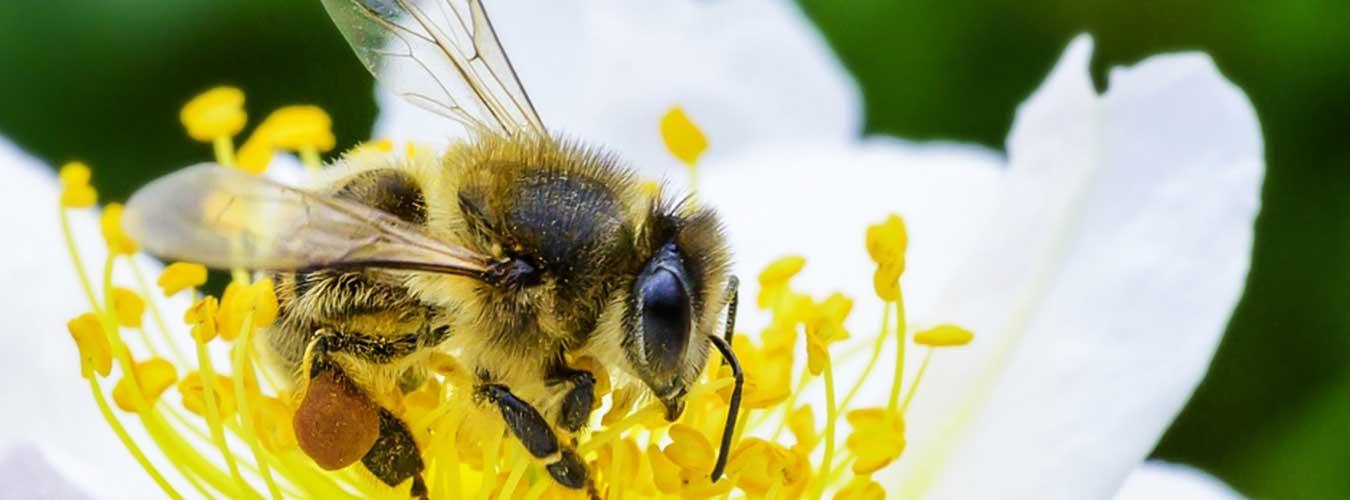
We all depend on the survival of bees
Bees and other pollinators, such as butterflies, bats and hummingbirds, are increasingly under threat from human activities.
Pollination is, however, a fundamental process for the survival of our ecosystems. Nearly 90% of the world’s wild flowering plant species depend, entirely, or at least in part, on animal pollination, along with more than 75% of the world’s food crops and 35% of global agricultural land. Not only do pollinators contribute directly to food security, but they are key to conserving biodiversity.
To raise awareness of the importance of pollinators, the threats they face and their contribution to sustainable development, the UN designated 20 May as World Bee Day.
The goal is to strengthen measures aimed at protecting bees and other pollinators, which would significantly contribute to solving problems related to the global food supply and eliminate hunger in developing countries.
We all depend on pollinators and it is, therefore, crucial to monitor their decline and halt the loss of biodiversity.
Bee engaged: Celebrating the diversity of bees and beekeeping systems
 20 May 2022, 13:00–14:45 CEST
Agenda | Register | Webcast
Beekeeping is a widespread and global activity, with millions of beekeepers depending on bees for their livelihoods and well-being. Together with wild pollinators, bees play a major role in maintaining biodiversity, ensuring the survival and reproduction of many plants, supporting forest regeneration, promoting sustainability and adaptation to climate change, improving the quantity and quality of agricultural productions.
This year FAO will celebrate World Bee Day through a virtual event, under the theme ‘Bee Engaged: Celebrating the diversity of bees and beekeeping systems’
The event featuring bee and pollinator experts and practitioners from across the world will open with a video message by FAO Director-General QU Dongyu. The event will raise awareness on the importance of the wide variety of bees and sustainable beekeeping systems, the threats and challenges they face and their contribution to livelihoods and food systems.
The event will be available in English, French, Spanish, Arabic, Chinese and Russian languages.
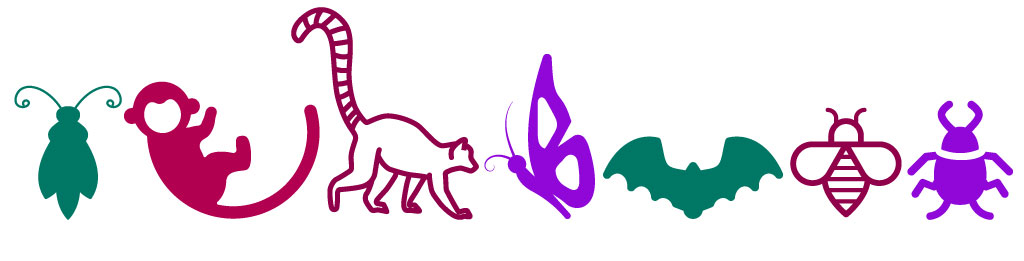
Do you know all the different pollinators?
We need to act now
Bees are under threat. Present species extinction rates are 100 to 1,000 times higher than normal due to human impacts. Close to 35 percent of invertebrate pollinators, particularly bees and butterflies, and about 17 percent of vertebrate pollinators, such as bats, face extinction globally.
If this trend continues, nutritious crops, such as fruits, nuts and many vegetable crops will be substituted increasingly by staple crops like rice, corn and potatoes, eventually resulting in an imbalanced diet.
Intensive farming practices, land-use change, mono-cropping, pesticides and higher temperatures associated with climate change all pose problems for bee populations and, by extension, the quality of food we grow.
Recognizing the dimensions of the pollination crisis and its links to biodiversity and human livelihoods, the Convention on Biological Diversity has made the conservation and sustainable use of pollinators a priority. In 2000, the International Pollinator Initiative (IPI) was established (COP decision V/5, section II) at the Fifth Conference of Parties (COP V) as a cross-cutting initiative to promote the sustainable use of pollinators in agriculture and related ecosystems. Its main goals are monitoring pollinators decline, addressing the lack of taxonomic information on pollinators, assessing the economic value of pollination and the economic impact of the decline of pollination services and protect pollinator diversity.
Along with coordinating the International Pollinator Initiative (IPI), the FAO also provides technical assistance to countries on issues ranging from queen breeding to artificial insemination to sustainable solutions for honey production and export marketing.
Discover other initiatives, national and international, dedicated to the protection of pollinators.
>> Facilitated by FAO
How can we do more?
Individually by:
- planting a diverse set of native plants, which flower at different times of the year;
- buying raw honey from local farmers;
- buying products from sustainable agricultural practices;
- avoiding pesticides, fungicides or herbicides in our gardens;
- protecting wild bee colonies when possible;
- sponsoring a hive;
- making a bee water fountain by leaving a water bowl outside;
- helping sustaining forest ecosystems;
- raising awareness around us by sharing this information within our communities and networks; The decline of bees affects us all!
As beekeepers, or farmers by:
- reducing, or changing the usage of pesticides;
- diversifying crops as much as possible, and/or planting attractive crops around the field;
- creating hedgerows.
As governments and decision-makers by:
- strengthening the participation of local communities in decision-making, in particular that of indigenous people, who know and respect ecosystems and biodiversity;
- enforcing strategic measures, including monetary incentives to help change;
- increasing collaboration between national and international organizations, organizations and academic and research networks to monitor and evaluate pollination services.
More tips on how to help bees and other pollinators
#unworldbeeday#fineartmagazinebeefun#savethepolinators