Friday, September 8, 2023

   Morgan Lehman Flat File Friday,

FLAT FILE FRIDAY
New artworks from Morgan Lehman's flat files in your inbox every Friday morning

Rachel Klinghoffer

And you drive all night and then you see a light, 2023

Tissue paper from gift from friend, receipt from local kosher butcher, buttons from FIT, Swarovski crystals, acrylic, paper

23h x 24w in

58.42h x 60.96w cm

$ 1,400.00

Click here to inquire

Rachel Klinghoffer is an artist and educator who makes objects that are both paintings and sculptures. By repurposing everyday materials, Klinghoffer prompts a reimagining of uses for these relic-like objects. The articles included in her work reflect the artist’s personal connection to femininity, craft-making, Judaism, and romance. The artist received her MFA with Honors in Painting from the Rhode Island School of Design and her BFA in Painting with course work in Visual and Critical Studies from the School of the Art Institute of Chicago. Select exhibitions Morgan Lehman, New York, NY; One River School, Woodbury, NY; The Skirt at Ortega y Gasset, Brooklyn, NY; Kristen Lorello, New York, NY; and BRIC, Brooklyn, NY. Klinghoffer’s work had been included in New American Paintings and reviewed by Whitehot Magazine and The Brooklyn Rail.

www.morganlehmangallery.com | 212-268-6699 | Tues - Sat 11-6

Instagram  Facebook  Twitter  

Thursday, September 7, 2023

Exhibition at The Met Examines How American Artists Responded to the Tumult of the 1930s


1iJx88VnCn1NoIi1R54Kotjn9tH

Exhibition at The Met Examines How American Artists Responded to the Tumult of the 1930s

Exhibition at The Met Examines How American Artists Responded to the Tumult of the 1930s

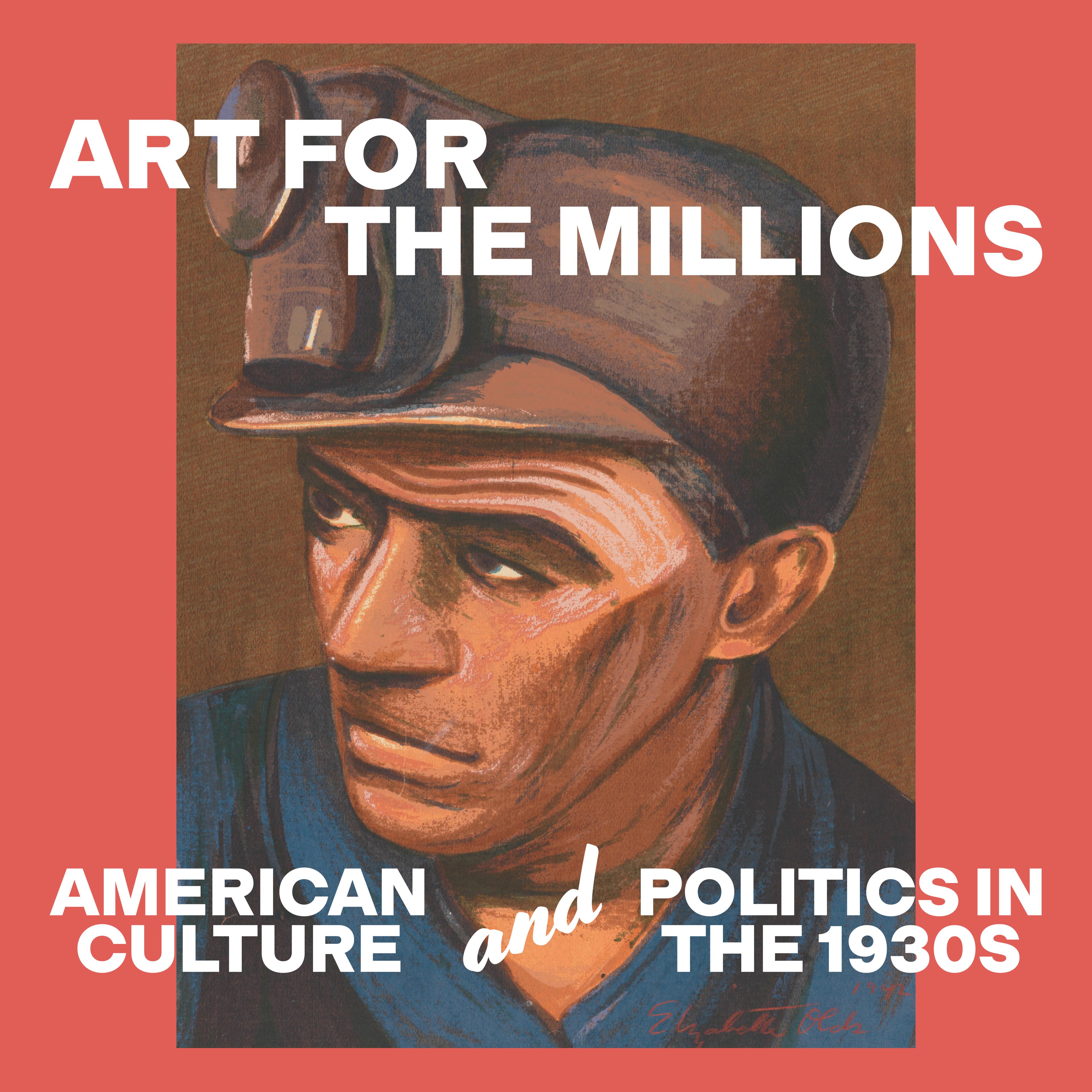
Art for the Millions: American Culture and Politics in the 1930s features more than 100 works, from paintings, photographs, and decorative arts to fashion, film, and ephemera

Portrait of a man with a brown cap and text that reads "Art for The Millions"


Exhibition Dates: September 7–December 10, 2023
Location: The Met Fifth Avenue, Galleries 691–93, The Charles Z. Offin Gallery, Karen B. Cohen Gallery, and Harriette and Noel Levine Gallery

The 1930s was a decade of political and social upheaval in the United States, and the art and visual culture of the time reflected the unsettled environment. Americans searched for their cultural identity during the Great Depression, a period marked by divisive politics, threats to democracy, and intensified social activism, including a powerful labor movement. Featuring more than 100 works from The Met collection and several lenders, Art for the Millions: American Culture and Politics in the 1930sexplores how artists expressed political messages and ideologies through a range of media, from paintings, sculptures, prints, and photographs to film, dance, decorative arts, fashion, and ephemera. Highlights include paintings by Georgia O’Keeffe, Charles Sheeler, and Stuart Davis; prints by Elizabeth Olds, Dox Thrash, and Riva Helfond; photographs by Walker Evans and Dorothea Lange; footage of Martha Graham’s dance Frontier; and more. The exhibition is on view September 7 through December 10, 2023.

The exhibition is made possible by the Horace W. Goldsmith Foundation and The Schiff Foundation.

"American artists witnessed astounding hardships in the 1930s and responded fervently," said Max Hollein, The Met’s Marina Kellen French Director and CEO. "As the nation confronts similar issues of political polarization and widening inequality today, this insightful exhibition serves as a poignant reminder of how artists then, like now, used their craft to connect with audiences, take action, and illuminate social ills. This presentation also brings to the fore women artists and artists of color who were often shut out of the mainstream art world."

Allison Rudnick, Associate Curator of Drawings and Prints, said: "While visual culture in the United States has always been suffused with ideology, cultural production in the 1930s is notable for representing an exceptional range of social and political messages. Every visual medium—from prints to film to fashion—played a role in transmitting these messages to millions of Americans. The works provide a unique framework for understanding a fraught and fascinating decade, one that mirrors today’s world in many ways."

Exhibition Overview

Organized thematically across three galleries, the exhibition provides an unprecedented overview of the sociopolitical landscape of the United States during the 1930s.

The dire unemployment situation during the Depression galvanized many Americans to take up communist and socialist causes. Protests, demonstrations, and strikes erupted across the country, and in response, President Franklin D. Roosevelt’s administration established the WPA, the Works Progress Administration (later renamed the Work Projects Administration). The exhibition’s first section, “Leftist Politics and Labor,” features the work of left-leaning artists who participated in the workers movement by joining artist unions and depicting laborers in their art, often using printmaking to broadcast their political beliefs to a large audience. Examples include Elizabeth Olds’s celebratory portrait of an ordinary worker, Miner Joe (The Met), and Charlie Chaplin’s parody of assembly-line work in his satirical film Modern Times. A watercolor by Dox Thrash offers a rare depiction of people of color organizing and participating in a 1930s labor strike (Pennsylvania Academy of the Fine Arts), and Norman Lewis’s lithograph The Soup Kitchen (The Met) calls attention to the particularly damaging effects of the Depression on Black Americans and other marginalized groups. Artists also spread their ideological messages through illustrations in communist and socialist magazines, including  Hugo Gellert’s, William Gropper’s, and Phil Bard’s contributions to New Masses.

Many who faced unprecedented hardship during the Depression found solace and a sense of belonging and pride in their American identity. The second section, "Cultural Nationalisms," reveals how the visual and material culture of the 1930s ultimately reflected nuanced and often conflicting stories about American identity. Some artists looked to the past, reviving historical American subjects, styles, and techniques, while others focused on the present by documenting the plight of those hit hardest by the economic downturn. Martha Graham romanticized the rural United States in her dance Frontier, while photographs by Walker Evans and Dorothea Lange reveal the harsh realities that tenant farmers faced during the Depression. Charles White sought to lay the groundwork for a more inclusive narrative of the nation’s history by bringing into focus the contributions of Black Americans, as seen in his graphite study of Sojourner Truth and Booker T. Washington (The Newark Museum of Art) for a larger mural composition. The prevailing interest in cultural nationalism was evident in the expanded market for Indigenous American art, such as Tonita Peña’s Pueblo Parrot Dance and Velino Shije Herrera’s Deer Hunters (both from National Gallery of Art, Washington, D.C.).

Even as the country weathered unprecedented financial strife, the United States became a world leader in technological and industrial innovation, as showcased in the third and final section, “The Promise of Progress.” The world’s fairs of the 1930s celebrated American exceptionalism and projected visions of a prosperous future. Millions of visitors experienced patriotic propaganda in exhibitions and at performances, and many more who did not attend were still exposed to it through posters, postcards, and other ephemera, such as Joseph Binder’s New York World’s Fair, The World of Tomorrow poster (Library of Congress). Augusta Savage’s 16-foot sculpture Lift Every Voice and Sing (The Harp), one of the most popular attractions at the New York World’s Fair but destroyed after it closed, is represented in the exhibition by a small-scale replica (New-York Historical Society). The fields of graphic, industrial, and architectural design led the way in developing aesthetic movements that emphasized advancement and modernization. Examples of streamline—the most influential design trend to originate in the United States—include Norman Bel Geddes’s “Patriot” radio, Isamu Noguchi’s “Radio Nurse” baby monitor, and Gilbert Rohde’s electric clock (all from The Met).

The phrase “art for the millions” in the exhibition’s title comes from an unpublished 1936 national report on the WPA’s Federal Art Project. Essays by participating artists and administrators were ultimately published in 1973 in what became a well-known anthology of the same name.

Credits and Related Content

Art for the Millions: American Culture and Politics in the 1930s is curated by Allison Rudnick, Associate Curator in The Met’s Department of Drawings and Prints.

The exhibition is accompanied by a fully illustrated catalogue. Published by The Metropolitan Museum of Art and distributed by Yale University Press, the catalogue is available for purchase from The Met Store.

The catalogue is made possible by the Diane W. and James E. Burke Fund.

The Museum will offer a variety of related programs, including performances by dancers from the Martha Graham Dance Company, a Sight and Sound concert by conductor Leon Botstein and The Orchestra Now, an Artists on Artworks event featuring Chase Hall, and more. Programming details are available on The Met website

The exhibition is featured on The Met website, as well as on social media using the hashtag #ArtForTheMillions.

Wednesday, September 6, 2023

Jamie Forbes: The Sun Sets Quickly this Time of the Year & Caterpillars on The Milk Weed 9/6, 2023


The Sun Sets Quickly this Time of the Year #1,
Jamie Forbes©SunStormArtsPub.Inc.


The Sun Sets Quickly this Time of the Year #2,
Jamie Forbes©SunStormArtsPub.Inc.

Caterpillar on the Milk Weed#2,
Jamie Forbes©SunStormArtsPub.Inc.

#jamieforbesphotographt#fineartmagazine#fieartphotofun


Monday, September 4, 2023

Are you Traveling? Vixst Hoffman, Maler, Wallenberg Gallery in Nice . Catch :Fabrizio Arrieta: Interlude On view: September 2–October 14, 2023

La conquista de la inocencia, 2023  
Acrylic on canvas 
180 × 140 cm
Hoffmann + Maler + Wallenberg is pleased to announce
 
Fabrizio Arrieta: Interlude

On view: September 2–October 14, 2023

Hoffmann + Maler + Wallenberg
Villa Poulido 9, Avenue Salonina, 06000 Nice

Fabrizio Arrieta: Interlude is an intimate display featuring four paintings by Costa Rican artist Fabrizio Arrieta (b. 1982, San José). This occasion marks the artist’s second collaboration with the gallery.

The four paintings were created in 2022 and 2023. Three are Arrieta’s distinctive medium-size portraits known for their uniquely metamorphic style, and the fourth is an expansive centerpiece that serves as the focal point of the presentation. Rather than constituting an extensive exhibition, this interlude bridges Arrieta’s 2021 show and his large exhibition with Hoffmann + Maler + Wallenberg coming in the fall of 2024.

These new works offer a glimpse into the artist’s evolving creative process, exploring new trajectories distinct from those seen in 2021. While all four pieces feature Arrieta’s characteristic fractured and otherworldly figures, the three smaller canvases, executed in acrylic, exhibit heightened concision. They draw less from preexisting online imagery and more from the depths of the artist’s imagination, personal experiences, and surroundings. The depicted forms have become even more enigmatic due to intensified fragmentation that could be described as a crumbling of figuration into geometric abstraction. Arrieta expertly manipulates depth, dimension, and identity, blending reality and illusion to suggest a captivatingly ambiguous relationship between observer and portrayed subject.

Instagram
Website
hoffmenmalerwallenberygallery#fineartmagazine#fineartfun 

Gallery Wendi Norris exhibition:Time Warriors, Sept. 6-Oct.-7 , 2023,

Ranu Mukherjee, bitter skin, 2023, pigment, ink, crystalina, and UV inkjet print on silk and cotton sari fabric on linen, 72 x 72 inches. 

Gallery Wendi Norris Presents
Alice Rahon and Ranu Mukherjee: 

Time Warriors

September 6 – October 7, 2023
529 West 20th Street Ground Floor
New York City 


Time Warriors is Gallery Wendi Norris’s second offsite exhibition in New York following Leonora Carrington: The Story of the Last Egg in 2019. The exhibition furthers the gallery's decades long commitment to presenting modern and contemporary artworks in conversation.

Opening Party September 6, 6 pm

Poetry Reading, Refreshments and Artist's Conversation Saturday September 9, 4-6 pm

Noted Scholar Mary Ann Caws reads from her translation of Shapeshifter by Alice Rahon. Artists Chitra Ganesh and Ranu Mukherjee in Conversation. 
 

Alice Rahon, La noche de Tepoztlán, 1964, oil and sand on canvas, 27 1/2 x 33 7/8 inches 
 
New York, September 4, 2023The themes and concerns alive in the work of Ranu Mukherjee and Alice Rahon cross generational boundaries and offer viewers the opportunity to consider ideas rooted in nature, materiality, and transcendence. Alice Rahon and Ranu Mukherjee: Time Warriors presents artworks that examine issues of migration and identities, our changing landscapes and environmental concerns, across history and into the future. 
 
On view in New York City September 6 - October 7, 2023 at 529 West 20th Street on the ground floor, the exhibition includes approximately 20 mixed media artworks spanning the mid-20th and early 21st centuries, depicting how both artists innovate across media to further investigate their themes.

“Beyond presenting the work of two artists who I admire and am proud to represent,” said Wendi Norris, “Time Warriors invites audiences to explore the way their work, from different perspectives and across generations, shares ideas and themes as an open conversation. It is striking how both Rahon and Mukherjee experienced a world in immense turmoil and have harnessed this energy to create deeply poetic and personal explorations of time and expression.”
 
In the case of Rahon (b. Chenecey-Buillon, France, 1904; d. Mexico City, 1987), she utilizes sand and the earth as well as found objects in many of her compositions, and famously refers to herself as "a cave painter," having delved back in time and through her experiences with indigenous cultures in Mexico to render uniquely timeless, stylistic compositions. 
 
Mukherjee (b. Boston, 1966) similarly explores the changing environments. Using the forest as a means of expressing connection with nature and time, she innovatively prints present day mass media images from climate change and feminist protests onto jamdani sari fabrics that are collaged into her paintings, often appearing as hybrid or invented groves of banyan, aspen, or black cherry trees.  
 
Both artists take inspiration from India, Indian culture, and concepts of being and time. Rahon’s first volume of poetry was published in 1936 upon her return from a sojourn in India with fellow poet and artist, Valentine Penrose. Many of her poems and paintings address nature and mysticism, as well as the duality and union of humanity and nature. Mukherjee draws from her ancestry in India, poetically utilizing sari cloths as her canvas, investigating the transformation of its material as well as the multiplicity of ideas in her layered images.
 
Rahon once described a process of hers as “a type of enchantment, like the development of photos in a tray—little by little, the forms emerge.” Likewise, Mukherjee utilizes a layered process of printing on textiles and then putting them down in the color fields. “While my compositions are very planned out, it is also like printing in a darkroom and watching the image emerge,” says Mukherjee. “The chemistry between the printed patterns and the fabric and then the colors and images in paint is really exciting and the process often seems magical.”

On Saturday September 9, from 4 pm to 6 pm, Gallery Wendi Norris and NYRB Poets present refreshments, conversation and poetry featuring renowned scholar Mary Ann Caws reading from Shapeshifter, her new translation of Alice Rahon’s poems, followed by cocktails and a conversation between gallery artists Chitra Ganesh and Ranu Mukherjee. The event celebrates the opening of Alice Rahon and Ranu Mukherjee: Time Warriors on view September 6 - October 7, 2023 at Gallery Wendi Norris, 529 West 20th Street ground floor, New York City. www.gallerywendinorris.com  
Alice Rahon, ¡Torito, Toro!, 1951,
oil and sand on canvas, 28 3/4 x 23 3/5 inches. 

About Alice Rahon
Alice Rahon (née Alice Marie Yvonne Philippot) was born in Chenecey-Buillon, France, on June 8, 1904. After publishing three volumes of poetry, she turned to the visual arts at the age of thirty-six and spent her mature years working almost exclusively as a painter. Rahon died in Mexico City in 1987, a naturalized citizen of Mexico.
 
Little is known of Rahon’s childhood, but a brief account of her early years reveals an independent and charismatic young woman of prodigious talent. At some point during her twenties she moved to Paris, where she created hats for the Surrealist-influenced fashion designer Elsa Schiaparelli. She was introduced to Man Ray, for whom she modeled, and became friends with Joan Miró. In 1931 she met the Austrian painter Wolfgang Paalen (1905-1959), who brought her into the circle of Surrealists led by André Breton. She and Paalen were married in 1934. 
 
Once she started painting, Rahon was recognized almost immediately as an accomplished artist. The San Francisco Museum of Art (now the San Francisco Museum of Modern Art) presented the first of two solo museum exhibitions of her work in 1945. Over the course of her lifetime, Rahon would create roughly 750 works of art and go on to exhibit widely in the United States and Mexico, as well as in Paris and Lebanon. She exhibited regularly with prominent galleries that included Peggy Guggenheim’s Art of This Century in New York, Caresse Crosby in Washington, D.C., Stendhal and Copley Galleries in Los Angeles, and Galería de Arte Mexicano in Mexico City. The Museo del Palacio de Bellas Artes in Mexico City presented a solo Rahon show in 1986. Rahon’s work is currently in the collections of the Art Institute of Chicago, IL; the Museum of Modern Art, NY; the Detroit Institute of Arts, MI; the Los Angeles County Museum of Art, CA; the Museo de Arte Moderno, Mexico City; the Kemper Art Museum in St. Louis, MO; the Blanton Museum of Art in Austin, TX; and the Davis Museum at Wellesley College, MA, among others. 

 
There has been a resurgence of interest in Rahon’s visual and written work over the last decade, catalyzed by the Los Angeles County Museum of Art’s 2012 show In Wonderland: The Surrealist Adventures of Women Artists in Mexico and the United States. In 2022 her artwork was featured in The Milk of Dreams, Venice Biennale, 59th International Art Exhibition. The Museo de Arte Moderno in Mexico City presented a retrospective of Rahon’s work in 2009. A subset of that exhibition was on view at the Museum of Contemporary Art in North Miami in 2019-2020, her first solo museum exhibition in the United States since 1953.

Her work has also been featured in various museum exhibitions of Surrealism and Mexican modernism, including Surrealism Beyond Borders at the Metropolitan Museum of Art, New York, and Tate Modern, London (2021-2022); Fantastic Women at the Schirn Kunsthalle, Frankfurt, and the Louisiana Museum of Modern Art, Humlebaek (2020); Modern Couples at the Centre Pompidou-Metz (2018); México 1900-1950: Diego Rivera, Frida Kahlo, José Clemente Orozco y las vanguardias at the Grand Palais, Paris, and the Dallas Museum of Art, TX (2017); Paint the Revolution: Mexican Modernism 1910-1950 at the Philadelphia Museum of Art, PA, Museo del Palacio de Bellas Artes, Mexico City, and Museum of Fine Arts, Houston, TX (2016-2017); Frida Kahlo: Conexões entre mulheres surrealistas no México, at the Instituto Tomie Ohtake, São Paulo, the Caixa Cultural Rio de Janeiro, and the Caixa Cultural de Brasília (2015); and Farewell to Surrealism: The DYN Circle in Mexico at the Getty Research Institute, Los Angeles, CA (2012-2013).


In 2012, Aubé Breton Elléouët, the daughter of André Breton, produced a documentary on Alice Rahon’s life and work entitled Alice Rahon, l’abeille noire (Alice Rahon: The Black Bee). The Getty Research Institute is acquiring the Alice Rahon archive in its entirety. In 2021, NYRB Poets released a comprehensive collection of Rahon’s poetry, translated by Mary Ann Caws, that includes newly discovered letters and poems from Picasso, Breton, and Paalen, among others.

In 2022, Gallery Wendi Norris released Alice Rahon, the first monograph on the painter-poet in English. This 128-page book is illustrated with highlights of her artwork from 1939 through the 1970s and includes an introduction by Wendi Norris and new research and essays by scholars Tere Arcq, Daniel Garza Usabiaga, and Maggie Borowitz, exploring her artistic techniques and unique place in art history.

 Ranu Mukherjee, American black cherry, 2022,
pigment, cristalina, pastel and UV inkjet print on silk and cotton sari fabric on linen, 72 x 96 inches
About Ranu Mukherjee
Ranu Mukherjee makes hybrid work in painting, moving image, and installation. Her work is marked by a deliberate use of saturated color, the collision of tempos, and sensual materiality. The numerous and often imperceptible layers she employs evoke questions of visibility, legibility, and abstraction. Her recent artwork is guided by the forces of ecology and non-human agency, diaspora and migration, motherhood, and transnational feminisms.

Mukherjee’s work has been the subject of solo exhibitions at the 18th Street Arts Center, Los Angeles (2022-2023) de Young Museum, San Francisco (2018-2019); the Pennsylvania College of Art and Design (2017);  the Asian Art Museum, San Francisco (2016); the Tarble Art Center, Charleston, IL (2016) and the San Jose Museum of Art, CA (2012), among others. Her most recent immersive video installations have been was presented in Natasha, Singapore Biennale 2022-2023, the 2019 Karachi Biennale (2019) and Los Angeles County Museum of Art (2016) as well as in numerous international group exhibitions. Mukherjee has been awarded a Pollock Krasner Grant (2020); a Lucas Visual Arts Fellowship at Montalvo Arts Center, Saratoga, CA (2019-20242); an 18th Street Arts Center Residency, Los Angeles (20220); Facebook Artist in Residence (2020);  de Young Museum Artist Studio Program (2017); the Space 118 Residency, Mumbai (2014); and a Kala Fellowship Award and Residency, Berkeley (2009). Her work is in the permanent collection of the Asian Art Museum, San Francisco; de Young Museum, San Francisco; the JP Morgan Chase Collection, New York; the Kadist Foundation, San Francisco and Paris; the Oakland Museum of California; the San Jose Museum of Art; and the San Francisco International Airport, among others. 

In 2021 Gallery Wendi Norris released Shadowtime, a major monograph on Mukherjee's work over the past decade featuring a conversation with author and climate activist Amitav Ghosh, and an essay by Jodi Throckmorton, curator of Mukherjee's first solo museum exhibition at the San Jose Museum of Art. 

Mukherjee co-created Orphan Drift, a London-based cyber-feminist collective and avatar making combined media works since 1994. They have participated in numerous exhibitions and screenings internationally including in London, Oslo, Berlin, Oberhausen, Glasgow, Istanbul, Vancouver, Santiago, Capetown, and the Bay Area.

Mukherjee received her B.F.A. in Painting, from the Massachusetts College of Art, Boston, MA in 1988, and her MFA in Painting at the Royal College of Art, London, UK in 1993.  Mukherjee lives and works in San Francisco. She is the Chair of the film program at California College of the Arts. 

About Gallery Wendi Norris 
Gallery Wendi Norris is a leading international art gallery with headquarters in San Francisco, California. The gallery holds decades-long relationships with 20th century luminaries such as Leonora Carrington, Dorothea Tanning, Wolfgang Paalen, Remedios Varo, and Alice Rahon, artists whose nomadic and visionary practices interrogated the aesthetic, scientific, and philosophical movements of their times. The gallery also represents María Magdalena Campos-Pons, Chitra Ganesh, Julio César Morales, Ranu Mukherjee, Eva Schlegel, Peter Young, and other contemporaries, artists whose work similarly flows across disciplines, continents, and generations as they speculate on the present moment.
 
Opened in 2002, Gallery Wendi Norris remains committed to its founding principles of rigorous programming, development of artists’ legacies, public accessibility, and cultural significance. To those ends, the gallery hosts visiting academics, sponsors artist talks, and publishes highly-researched books with original contributions from international scholars. The gallery actively supports artists in engaging new audiences through influential commercial, biennial, and institutional collaborations. Pioneering an offsite exhibition model in 2017, the gallery produces public-facing artworks and shows wherever they might reach the widest viewership and provide the deepest impact. Working in concert with major museums, private collectors, and innovative curators, Gallery Wendi Norris builds enduring, well-represented collections for its respected array of international clients.


Upcoming Exhibition:
Ambreen Butt, November 9 - December 23, 2023. 
#gallerywendynorris#fineartmagazine#fineartfun

Wednesday, August 30, 2023

The Menil Collection to Present "Janet Sobel: All-Over"

The Menil Collection to Present Janet Sobel: All-Over

Houston museum devotes exhibition to the artist’s abstract paintings, brought together for the first time in sixty years


 HOUSTON—August 30, 2023—The Menil Collection presents Janet Sobel: All-Over, featuring some thirty paintings and drawings made by artist Janet Sobel (1893–1968).On view exclusively at the Menil, February 23–August 11, 2024, the exhibition will explore Sobel’s work during her short-lived but meteoric rise to prominence as one of the first artists associated with Abstract Expressionism to pioneer a new approach to modern abstraction known as “all-over” painting. 


The show will bring together significant loans from U.S. museums, private collections, and the artist’s family that reveal Sobel’s exceptionally inventive and influential approach to modern abstraction. Major loans from Crystal Bridges Museum of American Art, Los Angeles County Museum of Art, the Museum of Modern Art, New York, and the San Diego Museum of Art reunite six of the artist’s famous “all-over” paintings for the first time in sixty years.

Rebecca Rabinow, Director, The Menil Collection, said, “We are delighted to present the vibrant and innovative works of Janet Sobel. In late 2020, the Menil received the gift of four drawings and one painting from the artist’s grandson, Len Sobel, which became the impetus to create an exhibition dedicated to her abstract art. Over the course of our research, we became fascinated by the impact she made during her brief career, and we are glad to help her once again receive the recognition she so richly deserves.”

Sobel began to make art around 1940. She often turned to non-traditional supports, ranging from glass and tile to cardboard, envelopes, and book covers. To these, she would apply oil and enamel paints, the latter most likely harvested from her family’s costume jewelry-making business, occasionally mixing them with sand. One of Sobel’s most accomplished paintings, Milky Way, 1945, displays the range of experimental techniques that she developed in the 1940s. After dripping paint onto the canvas, she blew it with a pipette, marbled the wet colors together, and tipped the support to move the pigments across the surface. Other works in the show reveal Sobel’s development of other unorthodox methods: for instance, in one painting she used a ridged tool to carve deep, lined scoops into the paint surface.


Sobel also created numerous drawings during her career. In many of these, she applied bold, bright colors in crayon, ink, and pencil, embedding faces and human figures within overgrown floral motifs and linear patterns. A selection of works on paper further expands the exhibition by demonstrating her approach to this practice, with a series of parallel strokes that knit foreground and background together into dense, interlocking shapes.


Natalie Dupêcher, Associate Curator of Modern Art, The Menil Collection, said, “All-Over will be the first time many of Sobel’s paintings have been seen together since her death in 1968. We are especially pleased to reunite a group of four identically sized abstract canvases, likely executed sequentially from around 1946 to 1948, that shed light on her groundbreaking process. Through this show, we hope to open an expansive dialogue on the artist’s incredible yet under-recognized contribution to abstract painting, returning her to the center of the conversation.”

After participating in several group shows in 1943, Sobel received her first solo show in 1944 at New York’s Puma Gallery. The exhibition was widely reviewed, and her work caught the eye of Peggy Guggenheim, the prominent dealer and collector. That fall, Guggenheim called Sobel “the best woman painter by far in America.” In the summer of 1945, a famed group show titled The Women opened at Guggenheim’s Art of This Century gallery. Sobel’s work was shown alongside Louise Bourgeois and Leonora Carrington. As Sobel’s work continued to attract attention and gain momentum, Guggenheim gave Sobel her second solo show in 1946.

In 1961, American art critic Clement Greenberg described Sobel’s technique as “the first really all-over effect that I had seen.” With the term “all-over,” he invoked a style of abstraction that was newly emergent in the 1940s, in which the composition extended from corner to corner and edge to edge, with no apparent center. However, Sobel’s role in the development of mid-century abstraction was soon written out of history books. This exhibition, the first to focus on Sobel’s highly accomplished and influential abstract paintings, seeks to restore the artist to her rightful place in art history.

Janet Sobel: All-Over is curated by Natalie Dupêcher, Associate Curator of Modern Art, The Menil Collection. The exhibition is organized with the support of the Sobel family.

About the Artist

Janet Sobel was born Jennie Olechovsky, in present-day Dnipro, Ukraine, in 1893. After her father was killed in one of the many pogroms, she emigrated with her mother and two siblings to the United States in 1908 and settled in New York. She began to paint around 1940, working out of her home in the Brighton Beach neighborhood of Brooklyn, New York. After her breakout success in the early and mid-1940s, Sobel relocated to Plainfield, New Jersey, with her family in 1947. Although she continued making art, particularly drawings, for the next twenty years, she largely disappeared from the public eye. Sobel received two more solo exhibitions, at a local art store and gallery, in 1957 and 1962.


About the Menil Collection

Philanthropists and art patrons John and Dominique de Menil established the Menil Foundation in 1954 to cultivate greater public understanding and appreciation of art, architecture, culture, religion, and philosophy. In 1987, the Menil Collection’s main museum building opened to the public. Today, the Menil Collection consists of a group of five art buildings and green spaces located within a residential neighborhood in central Houston. The Menil remains committed to its founders’ belief that art is essential to human experience and fosters direct personal encounters with works of art. The museum welcomes all visitors free of charge to its buildings and surrounding green spaces. menil.org

Funding

This exhibition is generously supported by Cindy and David Fitch; Caroline Huber; Susan and Francois de Menil; and the City of Houston through Houston Arts Alliance.

Image Captions

1. Janet Sobel, Milky Way, 1945. Enamel on canvas, 44 7/8 x 29 7/8" (114 x 75.9 cm). The Museum of Modern Art, New York, Gift of the artist's family. © Janet Sobel. Photo: © The Museum of Modern Art/Licensed by SCALA / Art Resource, NY

2. Janet Sobel, Untitled, ca. 1946–48. Enamel and sand on board, 17 5/16 × 14 in. (43.9 × 35.6 cm). The Menil Collection, Houston, Gift of Leonard Sobel and Family. © Janet Sobel. Photo: James Craven

Press Contacts

The Menil Collection

Jennifer Greene, Communications Manager

713-525-9477 / jgreene@menil.org

Polskin Arts 

Tommy Napier, Senior Account Supervisor