Thursday, October 27, 2022

Aspen Art Museum Opening on November 4, 2022, and running through March 26, 2023, Hervé Télémaque: A Hopscotch of the M


ASPEN ART MUSEUM PRESENTS HERVÉ TÉLÉMAQUE: A HOPSCOTCH OF THE MIND

On View November 4, 2022 through March 26, 2023


“I drew on my life as a Haitian of mixed race to construct a double language based on both the political and the social, the question of identity and racism, and sexuality.” – Hervé Télémaque

The Aspen Art Museum is pleased to present Hervé Télémaque: A Hopscotch of the Mind, a major exhibition of works by the influential Haitian artist and the first solo exhibition of Télémaque’s work in a US museum. Organized by Serpentine Galleries, London, with reconceptualized staging for the Aspen Art Museum presentation, the exhibition brings together works made in the late 1950s through the present day, highlighting the enduring themes of the artist’s multifaceted practice. Opening on November 4, 2022, and running through March 26, 2023, A Hopscotch of the Mind proposes a non-linear exploration of Télémaque’s visual vocabulary, encouraging viewers to jump across media and periods, forming their own associations between the disparate fragments of his idiosyncratic narration.

Nicola Lees, Nancy and Bob Magoon Director of the Aspen Art Museum, said, “Since the 1960s Hervé Télémaque has used his artistic practice to depict an engaging, narrative portrait of his world, addressing historical geopolitical events such as French colonization of Haiti, the Cuban Missile Crisis, and the Cold War through his signature style of captivating figuration. At the same moment in history, the Aspen Art Museum was founded with a mission to be a haven for artists that views their insight as crucial to our understanding of the world around us. With this in mind, we are delighted to have had the opportunity to reconceptualize the staging of the exhibition in Aspen with artist Helen Marten. We are grateful to the Serpentine’s former Associate Exhibitions Curator Joseph Constable and to Artistic Director Hans Ulrich Obrist for bringing forth this exhibition, and we are delighted to share Télémaque’s poignant work this fall.”

Throughout his career, Hervé Télémaque has created an expansive body of work with a unique visual vocabulary featuring abstract gestures, cartoon-like imagery, and mixed-media compositions. Through his paintings, drawings, collages, objects, and assemblages, Télémaque brings together striking combinations of historical and literary references with those of consumer and popular culture.

Incorporating images and experiences from Télémaque’s daily life, his extensive body of work consistently draws connections between the realms of interior consciousness and social experience, and the complex relationships between image and language. A vehement commitment to highlighting the histories and contemporary resonances of racism, imperialism, and colonialism has remained a constant throughout the artist’s career, often referring to his Haitian heritage and experience as part of the Caribbean diaspora. 

Exhibition highlights include:

  • A broad selection of works spanning from the 1960s to the present day, including never-before-seen pieces from the artist’s Paris studio and major loans from the Musée d’Art Moderne de la Ville de Paris, Fondation Maeght, Saint-Paul-de-Vence, and Musée d’art moderne et contemporain de Saint Etienne.
  • A striking exhibition design by artist Helen Marten with framing devices and apertures that highlight the visual and linguistic rhythms of Télémaque’s artworks.

This exhibition is organized by Serpentine Galleries, London, by Joseph Constable, former Associate Exhibitions Curator, and Hans Ulrich Obrist, Artistic Director. In keeping with the Museum’s artist-centered approach, the presentation at Aspen Art Museum is curated by Joseph Constable, Hans Ulrich Obrist, and artist Helen Marten, who have reconceptualized the staging of the exhibition.

ABOUT HERVÉ TÉLÉMAQUE 

Born in 1937 in Port-au-Prince, Haiti, Télémaque left for New York in 1957, when former president François Duvalier was elected to power, to study at the Art Students League under painter Julian Edwin Levi. Entering into an art scene dominated by Abstract Expressionism, Télémaque became interested in the approaches of artists such as Arshile Gorky, Willem de Kooning, Jasper Johns, and Robert Rauschenberg, but at the same time felt limited by this early influence: “This thoroughly New York school seemed inadequate for me to express where I came from and who I was.”

In 1961, Télémaque moved permanently to Paris, associating with the Surrealists, and later co-founding the Narrative Figuration movement in France with artists Gérald Gassiot-Talabot and Bernard Rancillac through the manifesto exhibition Mythologies quotidiennes at the Musée d'Art Moderne de la Ville de Paris in 1964. A reaction against the dominant trend towards abstract art and the developing movement of Pop Art in North America, Télémaque’s Narrative Figuration often results in works with a Pop sensibility that incorporate consumer objects and signs. His painting No Title (The Ugly American), 1962/64, was included in the reinstallation of MoMA’s permanent collection as part of the museum’s reopening in 2019 following a renovation and expansion.

By tracing the arc of his career from the 1950s onwards and unravelling these multilayered and complex works, the exhibition reveals the relevance and resonance of his practice to our current moment. Through their cartoon-like style and fluid approach to medium, Télémaque’s works utilize playful metonymies for the pervasive structures that continue to underpin our lives, making his work as pertinent to current artistic discourses as it is to challenging the political and art-historical narratives of the past sixty years.

ABOUT THE ASPEN ART MUSEUM

Accredited by the American Alliance of Museums in 1979, the Aspen Art Museum is a globally engaged non-collecting contemporary art museum. Following the 2014 opening of the museum’s facility designed by Pritzker Prize–winning architect Shigeru Ban, the museum enjoys increased attendance, renewed civic interaction, and international media attention. In July 2017, the museum was one of ten institutions to receive the United States’ National Medal for Museum and Library Services for its educational outreach to rural communities in Colorado’s Roaring Fork Valley and its learning partnerships with civic and cultural partners within a 100-mile radius of the museum’s Aspen location.

Museum hours

Tuesday–Sunday, 10 AM–6 PM

Closed Mondays

Aspen Art Museum ADMISSION IS FREE courtesy of Amy and John Phelan

For the most up-to-date information on COVID-19 protocol, please refer to the Museum website. Visit the Aspen Art Museum online: aspenartmuseum.org 

This exhibition is organized by Serpentine Galleries, London.

Aspen Art Museum exhibitions are made possible by the Marx Exhibition Fund. General exhibition support is provided by the Toby Devan Lewis Visiting Artist Fund. Additional support is provided by the Aspen Art Museum National Council. 

Image: Hervé Télémaque, Inventaire, un homme d’intérieur (Inventory, an Interior Man), 1966. Acrylic on canvas, private collection. Courtesy Paul Coulon

#apsenartmuseum#fineartmagazine#fallfineartfun

Phillips NYC, Cy Twombely November 15th,


Monumental Cy Twombly Bacchus Painting to Lead Phillips’ New York Evening Sale of 20th Century & Contemporary Art


To be Offered on 15 November, Estimated at $35-45 Million


Cy Twombly

Untitled, 2005

Estimate: $35,000,000 – 45,000,000


On 15 November, Phillips’ Evening Sale of 20th Century & Contemporary Art in New York will be led by Cy Twombly’s monumental Untitled, 2005. With exceptional provenance and estimated at $35-45 million, Untitled is a masterpiece from one of Twombly’s last epic series that found its inception in his blackboards and crystallized in the three discrete suites of paintings collectively known as the Bacchus series. The Bacchus paintings began in 2003 amidst the US invasion of Iraq and culminated in 2008 when the artist donated three of the monumental works to the Tate Modern, London. The present work is the second-largest canvas from the 2005 series which were exhibited under the collective title Bacchus Psilax Mainomenos. Recalling the artist’s earlier Blackboard paintings from the late 1960s with its continuous looping forms, theBacchus series revisits this earlier motif with a renewed vigor and energy which manifests on the surface ofUntitled.


Jean-Paul Engelen, President, Americas, and Worldwide Co-Head of 20th Century & Contemporary Art, said, “With the top ten auction prices for works by Cy Twombly having all been set in the past eight years, it’s clear that the market is stronger than ever.  At sixteen feet wide, Untitled is among the largest of Twombly’s works to ever appear at auction, with its subject referring to the dual nature of the ancient Greek and Roman god of wine, intoxication, and debauchery. The work hails from the series that marked Twombly’s ultimate artistic expression at the summit of his career and we are proud to offer this masterpiece as the highlight of our Fall season.”


The translation of Bacchus Psilax Mainomenos references both the exuberance and rage that alcohol can bring, with Tate Director Nicholas Serota remarking about the paintings, “They relate obviously to the god of wine and to abandon, and luxuriance, and freedom.” The work also recalls one of the most violent and emotionally stirring moments of Iliad, when the Greek hero, Achilles, kills the Trojan prince, Hector, dragging his corpse in circles through the desert around the walled city of Troy—just as Twombly’s red line colors the ground of Untitled. 


The repetition of the mythical theme in Twombly’s work, particularly the continued invocation of Bacchus across the years, finds its stylistic parallel in Twombly’s signature, circular, scrawling gesture.  Two extremes rise and fall within one ancient deity, cycling, one over the other, just as Twombly’s brush turns across the surface of Untitled. This gesture appeared in the artist’s earlier Blackboard series of the 1960s, making a reprise in Untitled, though with a much wilder red spiral.  The red line of Untitled is rich with emotive movement as the spiral turns and drips across the canvas, the result of Twombly likely using his whole body, swinging the brush, which he attached to a long pole, across the canvas.


Auction: 15 November 2022

Auction viewing: 5-15 November 2022

Location: 432 Park Avenue, New York, NY

Click here for more information: https://www.phillips.com/auctions/auction/NY010722


ABOUT PHILLIPS

Phillips is a leading global platform for buying and selling 20th and 21st century art and design. With dedicated expertise in the areas of 20th Century and Contemporary Art, Design, Photographs, Editions, Watches, and Jewelry, Phillips offers professional services and advice on all aspects of collecting. Auctions and exhibitions are held at salerooms in New York, London, Geneva, and Hong Kong, while clients are further served through representative offices based throughout Europe, the United States and Asia. Phillips also offers an online auction platform accessible anywhere in the world.  In addition to providing selling and buying opportunities through auction, Phillips brokers private sales and offers assistance with appraisals, valuations, and other financial services.

Visit www.phillips.com for further information.


*Estimates do not include buyer’s premium; prices achieved include the hammer price plus buyer’s premium.


PRESS CONTACTS:            

NEW YORK – Jaime Israni, Public Relations Director, Americas     jisrani@phillips.com  


PHILLIPS NEW YORK – 432 Park Avenue, New York, NY 10022

PHILLIPS LONDON – 30 Berkeley Square, London, W1J 6EX

PHILLIPS HONG KONG – 14/F St. George’s Building, 2 Ice House Street, Central Hong Kong


#phillipsauctioncontemporary#fienartmagazine#fineartfun

The Bronx Museum Plans to Renovate!!!!!

  
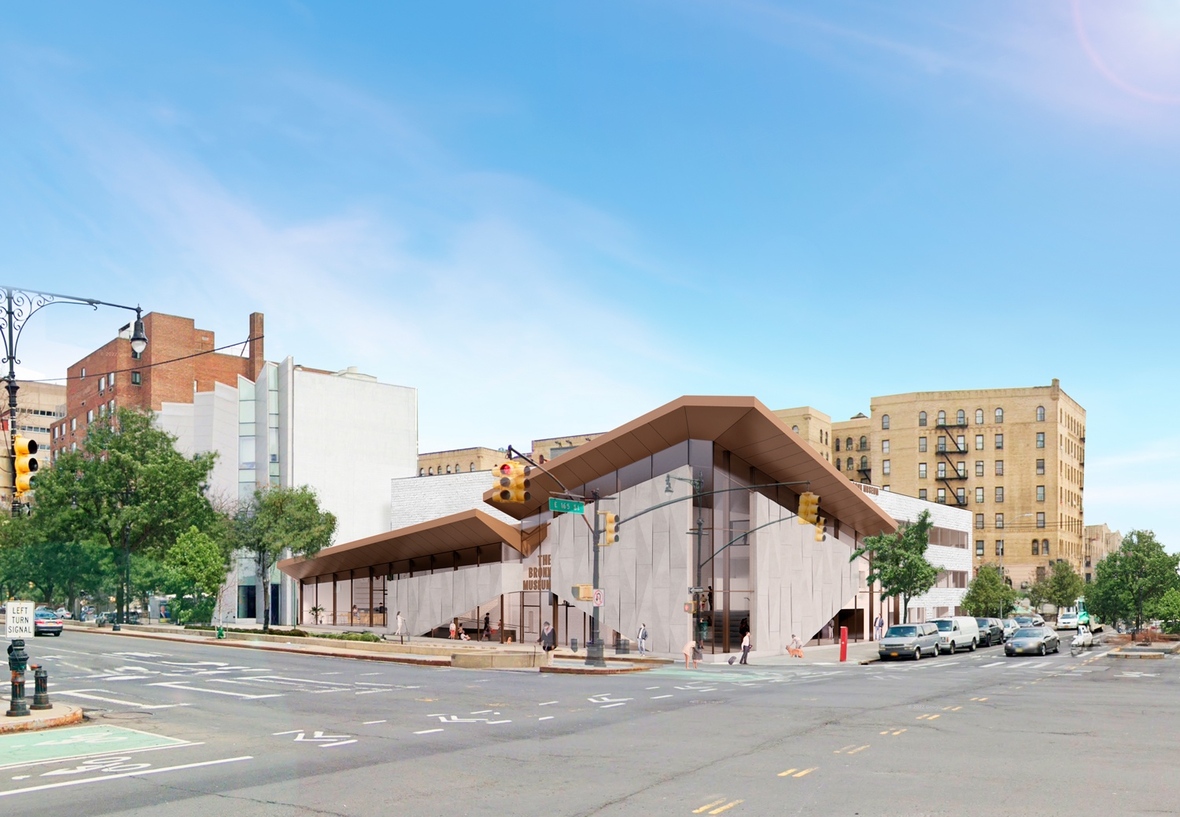
Render of new Grand Concourse Entrance of The Bronx Museum of the Arts. Courtesy of Marvel

Render of new Grand Concourse Entrance of The Bronx Museum of the Arts. Courtesy of Marvel

The Bronx Museum reveals schematic design for renovation of its Grand Concourse entrance, and announces rebrand + website relaunch 

The Bronx Museum of the Arts, the city’s only free contemporary art museum, is pleased to reveal schematic designs for the renovation of its new multi-story entrance and lobby on the corner of Grand Concourse and 165th Street by Marvel, an award-winning architecture, landscape architecture, interiors and urban planning practice. Marking the Museum’s 50th anniversary, the $26 million renovation is supported by city funds––with additional support from the state––and is overseen by the New York City Economic Development Corporation (NYCEDC) on behalf of the New York City Department of Cultural Affairs (DCLA) and The Bronx Museum, and is slated for completion in 2025. Coinciding with this announcement, the Museum is pleased to share a refresh of its brand identity and website by New York based strategy and design studio Team. It is the first time the Museum’s identity has been redesigned in over two decades.

The Bronx Museum was founded in 1971 by community leaders and activists at a time when the borough was in crisis, and for half a century has carved an identity as a museum dedicated to social justice. The Museum remains committed to investing in its local communities and the belief that art and culture are essential on the path to achieving social justice and equity. Klaudio Rodriguez, Executive Director, comments: “The Bronx Museum was founded for the people of the Bronx, and has become a globally recognized institution. With the renovation of our entrance and new identity, we hope to further our mission to not only champion artists who are not typically represented within museums, but also amplify our ability to educate, engage and provide a critical gathering space for our communities.”

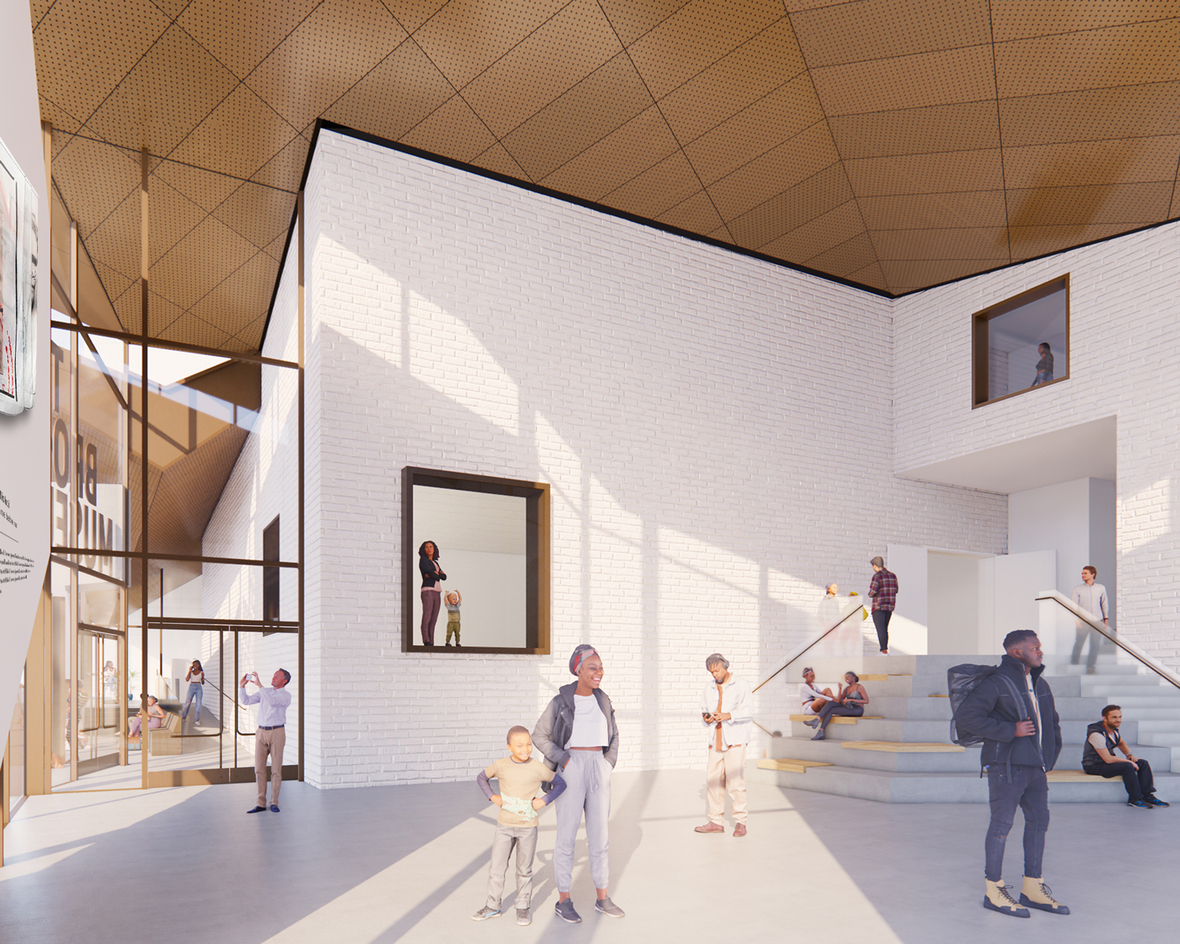
Marvel’s renovation of the South Atrium will elegantly integrate the South Wing with the North Wing by utilizing a unifying architectural language and a reimagined, spacious lobby with a seating area, a gathering space, and large street-facing displays for rotating installations. The relocation of the main entrance towards the highly-visible intersection of Grand Concourse and 165th Street will open up the Museum's reach and expand the experience to the sidewalk, offering multiple visibility opportunities for art and public programming from the street.

Jonathan Marvel, founding principal, Marvel, comments: “Marvel’s design for the renovation and expansion of The Bronx Museum channels the Bronx’s can-do, hip-hop creativity and resourcefulness. More than a museum, The Bronx Museum breaks down barriers, is a source of culture and a gathering space for the community, and visitors from around the globe. The Marvel team is enthusiastically working alongside The Bronx Museum to blur the boundaries of building and sidewalk, and reach a city-wide audience. In designing a new front door for the people of the Bronx, we are opening the Museum’s exhibitions, programs and events for the entire community to enjoy.”

Renders of the interior of The Bronx Museums new lobby 1. Courtesy of Marvel.

Renders of the interior of The Bronx Museum’s new lobby. Courtesy of Marvel.

The design principles are rooted in the Grand Concourse's history and the building's evolution throughout the past four decades. Marvel’s primary design goal was to unify the Museum's multiple buildings into a single experience and make it a recognizable public destination within the Bronx. Not only focused on the cohesion of the exterior but also internally, the renovation offers new connections between both buildings and allows for a fully accessible route through all the galleries. Stemming from the articulation of the 2006 North Wing addition, Marvel utilizes folded copper bronze panel roofs that reflect the warm tones of the surrounding brick and tie to the art deco influence of the Concourse district. Furthermore, the design pays respect to the existing synagogue building from 1962 by stripping down the dark metal panels that conceal brick walls of the original design.

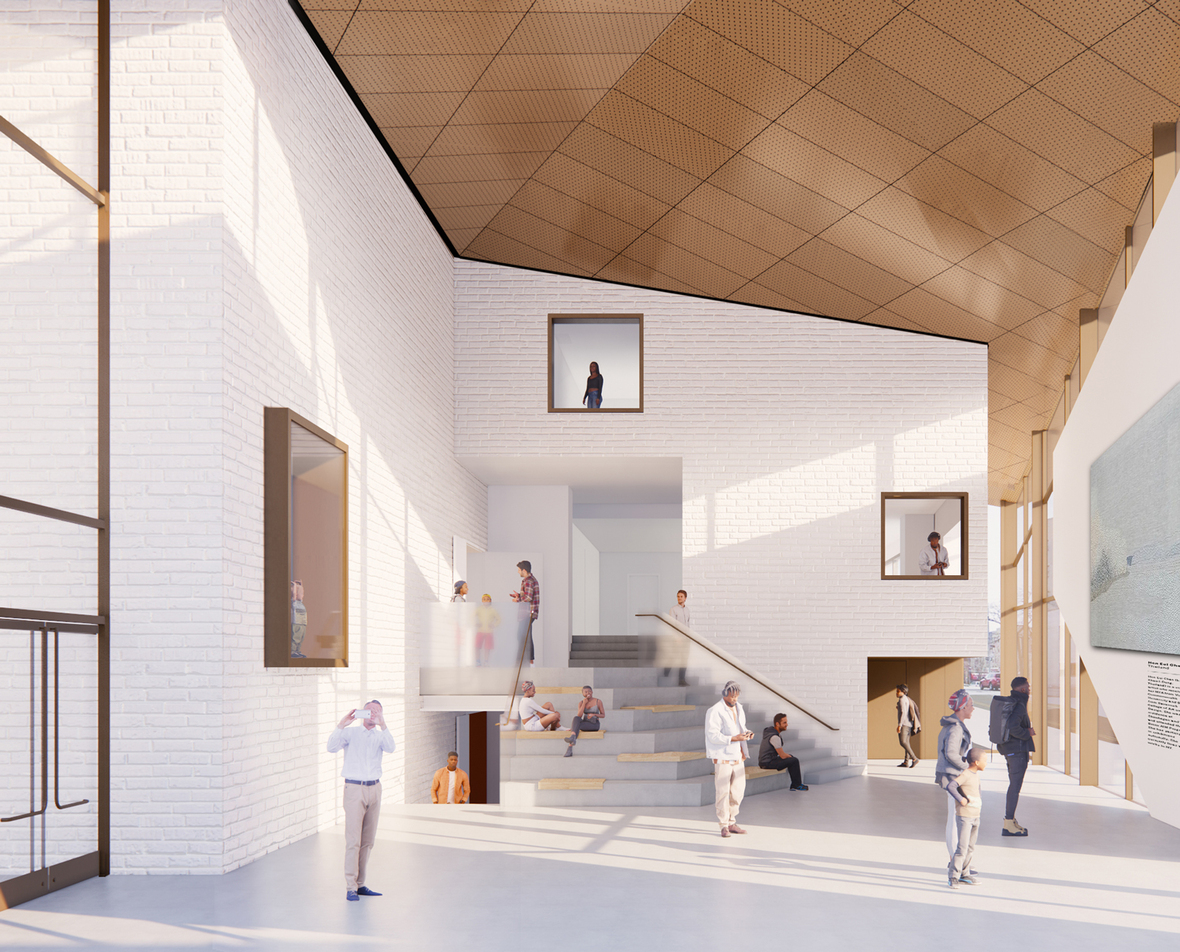
Renders of the interior of The Bronx Museums new lobby 2. Courtesy of Marvel.

Renders of the interior of The Bronx Museum’s new lobby. Courtesy of Marvel.

Marvel proposes an architecture that is accessible and open to all with no visual interference to the multiple layers of art and activities happening inside the Museum. The building is glazed on all sides, interlaced with glass fiber reinforced concrete (GFRC) textured walls that serve as interior exhibition surfaces and frame the views into the deeper gallery spaces. The project aims to bring the street into the gallery and bring the gallery back to the street, blending the boundary between the two, keeping in line with the active street life of the neighborhood. The expansive triple-height project space at the corner offers a clear opportunity that allows art to be visible to pedestrians and invites newcomers inside. As soon as one enters the Museum at the intersection of the roof planes, the visitor is immersed in the museum experience, stepping into a welcoming space that aspires to become the Bronx's new living room.

Bronx Museum Brand Animation-2

The Bronx Museum’s new graphic identity. Courtesy of Team.

Led by award-winning design firm Team––known for their work with such arts organizations as Philadelphia Contemporary, Absolut Art, and the Foundation for Contemporary Arts––the redesign of the Museum’s logo and website mark a crucial step in the revitalization of its identity after half a century of serving the Bronx. Formulated as The Bronx Museum celebrates its 50th Anniversary, the new brand identity is bold, distinct, and resilient so as to reflect the ethos of the Museum and its vital work at the intersection of art and social justice.

Amy Globus, Co-founder and Creative Director of Team, comments: “The Bronx is the only borough in New York with ‘the’ in its name. The Bronx Museum’s new logo proudly embraces ‘the’ as a confident declaration of the institution’s acclaimed history and vision. Anchored on ‘the,’ the bold design system features striking typography and an expressive palette that embeds the museum name in all of its programming, events and initiatives. The new identity is dynamic, expressive, and the shorthand for everything The Bronx Museum represents: the culture, spirit, and tenacity of The Bronx.”

Just as the new entrance provides wider public access to the Museum, so too will the new website—which, for the first time, will provide a bilingual user experience with Spanish translations and prominently display The Bronx Museum’s rich archival material, including educational initiatives such as the Teen Council. An unparalleled program offering paid opportunities for young people to deeply engage with contemporary art and the museum space, the Teen Council has conducted an ongoing series of interviews, since 2005, with artists including Firelei Báez, Njideka Akunyili Crosby, Layota Ruby Frazier, Jamel Shabazz, and Sarah Sze.

“A little over fifty years ago, The Bronx Museum was founded by trailblazing activists during a time of upheaval and instability in the Bronx, and in the ensuing years, the Museum along with the community experienced both great accomplishments and profound challenges,” continued Executive Director Klaudio Rodriguez. “Each time, we, along with the Bronx, grew stronger and met the challenges valiantly, humbly, with purpose and resolve. While the road ahead is exciting and bright, we are poised, nimble, and ready to take on any challenge that comes our way. Because the future is a shining beacon before us, and we are Bronx Strong.”

  
#bronxmuseumart#fineartmagazine#fineartbronxfun

Tuesday, October 25, 2022

JORDAN SEABERRY, Through Saturday, October 29th. at the STEVEN ZEVITAS GALLERY

STEVEN ZEVITAS GALLERY


EXTENDED:


JORDAN SEABERRY:

But Mostly We Waited for Spring, When There Could Be Gardens


The exhibition will now be on view through Saturday, October 29th.  


Steven Zevitas Gallery is pleased to present But Mostly We Waited for Spring, When There Could Be Gardens, an exhibition of new paintings by Jordan Seaberry. The exhibition will run from September 9 – October 29, 2022.


The paintings on view represent a departure for Seaberry, both in terms of their subject and materiality. Using Works Progress Administration (WPA) photographs as source material and watercolor as his primary medium, Seaberry has created a complex body of work that simultaneously draws from history and collapses it.


“For two brief moments in the twentieth century, the federal government demonstrated that it can, when it chooses, directly support artists not as mere commercial engines or tourism supporters, but as cultural practitioners. The WPA of the New Deal Era and the Comprehensive Employment and Training Act (CETA) of the 70’s, showed what we all should know: artists are smart people, able to solve big problems, and build social cohesion through cultural practice.


Artists constantly build politics of cooperation in the face of extractive industries, insisting on the importance of cultural tapestries for building new relationships to each other and to the natural world. Each painting in this group is compositionally built on one of the photos created by a WPA photographer, some of the most remarkable photos of our history. The resulting paintings exist in conversation with and compression of that history.


The figures represent a departure from much of my previous work which often involved anonymized, fictional or historical figures. Here, each painting depicts and recontextualizes a person who has built, supported, loved me: an act of labor also often ignored.


Watercolor is deployed here laboriously and gently, on small traditional scales, and unusually large canvases. The surfaces are built through several perfected layers of modeling paste and gesso, power sanded to operate like paper. Harkening to architectural and construction materials, its absorbent surface holds the delicate paint within the history of its labor.


At odds here are not just the materials: watercolor at a large scale, canvas labored into smoothness, but time as well. History is compressed through layer and linearity. The politics are not interpersonal: no figures make eye contact with anyone but the viewer, instead these works investigate a relationship beyond extraction, an anti-progression, a remembrance of the trees and water that predate and outlast the telephone pole and the factory. The rightful inheritance of these figures isn't wealth or land, it's relationship.”

Please email liz@stevensevitasgallery.com with questions or inquiries.

Jordan Seaberry is a painter, organizer, legislative advocate and educator. Born and raised on the Southside of Chicago, Jordan first came to Providence to attend Rhode Island School of Design. Alongside his studio practice, he built a career as a grassroots organizer, helping to fight and pass multiple criminal justice reform milestones, including Probation Reform, the Unshackling Pregnant Prisoners Bill, and laying the groundwork for the “Ban the Box” movement in Rhode Island.


Seaberry serves as Co-Director of the U.S. Department of Arts and Culture, a people-powered nonprofit agency, and most recently worked as the Director of Public Policy at the Nonviolence Institute. He serves as Chairman of the Providence Board of Canvassers, overseeing the city’s elections; as a Board Member at New Urban Arts in Providence; and as a Board Member for Protect Families First, working on community-oriented drug policy reform. He has received fellowships from the Art Matters Foundation, the Rhode Island Foundation, and recently served as Community Leader Fellow at Roger Williams University School of Law.


Seaberry has exhibited work with several institution, including the RISD Museum, the deCordova Museum, the Crystal Bridges Museum, and the Boston Center for the Arts. His work has been featured in exhibitions throughout New York, Chicago, Los Angeles, Philadelphia and elsewhere. This is Seaberry’s second solo exhibition with Steven Zevitas Gallery.


STEVEN ZEVITAS GALLERY

450 Harrison Ave., Suite #47

Boston, MA 02118

617 778 5265 x22


@stevenzevitasgallery

#stevensevitasgallery#fineartmagazine#artfunfall